

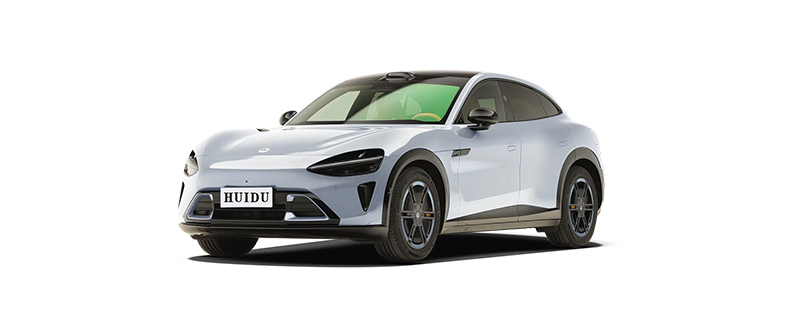
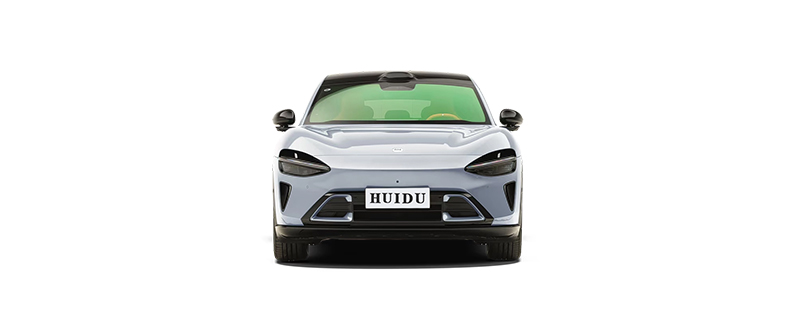
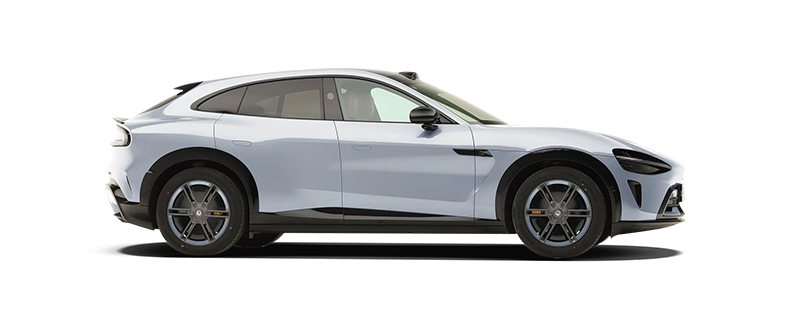
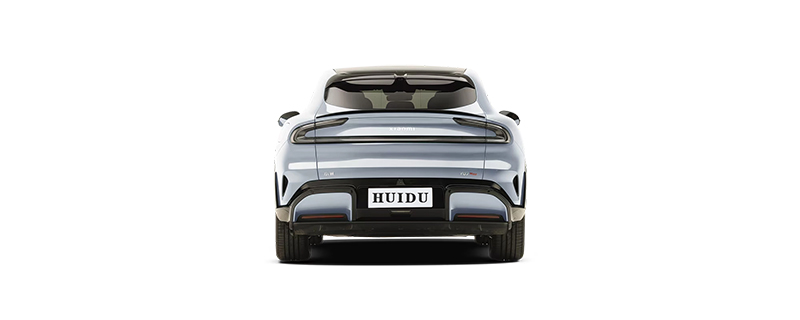
At a time when the 250,000–300,000 RMB all‑electric SUV segment has long been dominated by the Tesla Model Y — thanks to its first‑mover advantage and brand halo — the Xiaomi YU7 enters the fray with a compelling promise of blending family practicality with exhilarating performance. By leveraging segment‑above dimensions, potent powertrains, and the full intelligence of Xiaomi’s ecosystem, the Xiaomi YU7 aims to redefine the value equation for 250,000 RMB electric SUVs. On the road, the Xiaomi YU7 family offers a complete product spectrum that spans everyday family use to track‑day capability.
Launched in June 2025, the Xiaomi YU7 Standard (Long Range RWD) started at 253,500 RMB, the Dual‑Motor Pro at 279,900 RMB, and the high‑performance AWD Max at 329,900 RMB — all riding on an 800V silicon carbide high‑voltage platform. The Standard version features a rear‑mounted single motor producing 235 kW (approx. 320 hp), accelerating from 0‑100 km/h in 5.88 seconds, and delivering an impressive CLTC range of 835 km. On May 21, 2026, a new Xiaomi YU7 Standard edition rejoined the lineup at a more accessible 233,500 RMB, equipped with a 73 kWh LFP battery and a 752V architecture, offering 643 km of CLTC range and adding 405 km of range with a 15‑minute fast charge. At the top of the range, the flagship Xiaomi YU7 GT is powered by Xiaomi’s self‑developed V8s EVO e‑motor. Its dual‑motor setup produces a combined 738 kW (1,003 hp), launching the car from 0‑100 km/h in just 2.92 seconds. On the Nürburgring Nordschleife, it recorded a lap time of 7 minutes 22.755 seconds — a staggering 14‑second improvement over the previous production SUV record.


By comparison, the Tesla Model Y RWD packs a 220 kW (approx. 299 hp) single motor, achieving 0‑100 km/h in 5.9 seconds with a CLTC range of roughly 554‑593 km. The Model Y Performance’s dual motors deliver 393 kW (approx. 536 hp), a 0‑100 km/h time of 3.7 seconds, and 615 km of range. While the two models overlap heavily in propulsion type and market positioning, their driving philosophies diverge sharply: the Xiaomi YU7 is an “all‑rounder that equally prioritises technology and performance,” seeking an optimal balance between power, space and intelligence. The Tesla Model Y, in contrast, is an “efficiency‑first EV benchmark,” building its moat on exceptional energy management and a proven autonomous driving experience.
“When the Xiaomi YU7 launched in June 2025, it secured over 240,000 locked orders within 18 hours, and by May 2026 cumulative deliveries had reached 233,000 units. Priced at 233,500 RMB, it redefines the entry threshold for family electric SUVs; with a 2.92‑second Nürburgring lap time, Xiaomi has evolved from ‘instant hit at launch’ to a dual breakthrough on both track and family segments in just one year.” – Li Xiang, industry observer
The Xiaomi YU7’s handling is its most surprising attribute — a delight rooted in a chassis that delivers “one platform, two personalities.” All versions come with a front double‑wishbone, rear five‑link independent suspension, complemented by closed‑loop dual‑chamber air springs and CDC variable dampers. The standard setup uses components from a leading Tier 1 supplier (the Pro and Max editions add ZF CDC and Tuopu closed‑loop dual‑chamber air suspension), offering hardware typically found in cars costing twice as much.
In city commuting, switching to Comfort mode transforms the chassis into a “mobile sofa.” The suspension filters out road imperfections with extraordinary thoroughness — whether on broken asphalt or highway expansion joints, no harsh impacts intrude into the cabin. Instead, the ride feels eerily smooth, almost like a maglev train. This strong bias toward family comfort draws a clear line between the YU7 and the Model Y’s sportier, tauter, road‑sensitive character. In Comfort mode, rear passengers may find the Model Y slightly jittery, while the Xiaomi YU7 glides like silk.

But don’t mistake this large crossover for a tame giant. The chassis was tuned at Xiaomi’s Munich R&D centre, led by a former BMW M division technical director, and incorporates rear‑axle torque vectoring and an active ride stabilisation system. Flick the drive mode to Sport+, and the air suspension instantly lowers the ride height, dampers stiffen, and the full 690 hp stands ready. The explosive acceleration — 0‑100 km/h in 3.23 seconds (Max) or 2.92 seconds (GT) — remains remarkably composed thanks to the taut chassis. High‑speed lane changes feel planted, and the car holds its line confidently through fast corners, inspiring driver confidence. Given the complexity and variety of daily driving scenarios, the Xiaomi YU7’s adaptable chassis capably handles both urban comfort and high‑speed stability.
On braking, the Standard edition comes with large ventilated discs offering linear, controllable bite. The Max edition upgrades to high‑performance calipers and carbon‑ceramic discs, with a tested 100‑0 km/h stopping distance of 33.9 metres. The GT edition goes further, featuring Akebono front six‑piston calipers and carbon‑ceramic brakes shared with the Ultra, achieving a 100‑0 km/h distance of just 32.9 metres and completing ten consecutive full stops from 180 km/h without any fade. The Model Y Performance’s braking distance is in the 36‑38 metre range, giving the Xiaomi YU7 GT a clear edge in hardware specifications and extreme‑condition stability.
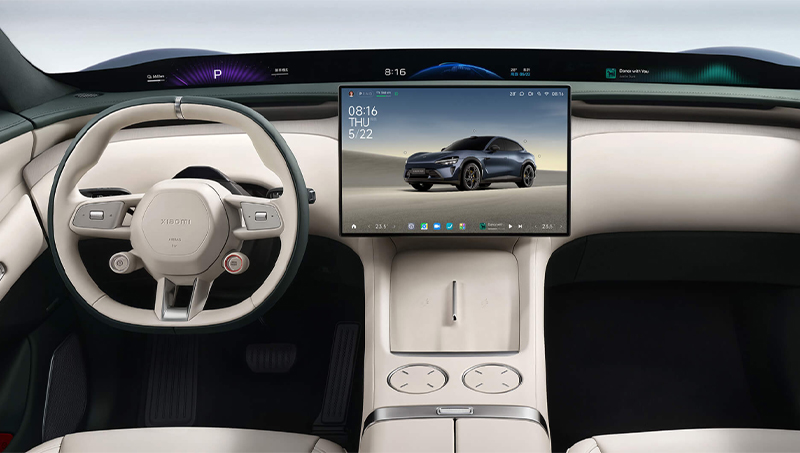
Step inside the Xiaomi YU7’s cockpit, and a wave of technology greets you. Xiaomi’s EEA four‑in‑one domain controller integrates the cockpit, autonomous driving, vehicle control and communication modules into a highly compact unit. The standard Xiaomi HyperVision panoramic display, powered by the third‑generation Snapdragon 8 mobile platform, spans 1.1 metres, offers a super‑retina 108 PPD resolution and a peak brightness of 1,200 nits. Using panoramic curved‑surface projection technology, it projects information onto the black area below the windshield, providing a clear, unobstructed view. All‑wheel‑drive versions come with a Nappa leather‑wrapped steering wheel, while Max and above add a suede microfiber headliner. Four‑door laminated acoustic glass and over 30 noise‑insulating materials create a serene cabin.
The enhanced Xiao Ai voice assistant now features an on‑device large language model, supporting five‑zone voice interaction. The tailgate can be opened by voice command even from outside the vehicle, and Sentry Mode can quickly summarise events. Xiaomi HyperOS seamlessly bridges the smartphone, car and smart home ecosystems — a core moat that distinguishes the Xiaomi YU7 from every other electric SUV. Mi IoT devices transfer effortlessly, the car unlocks automatically as you approach, and navigation or music playback continues where you left off. By contrast, the Model Y’s cabin adheres to a minimalist philosophy — no instrument cluster, most functions consolidated on a 15.4‑inch central screen. While its energy efficiency is unmatched, the sense of luxury and immersive smart experience in the Model Y now lags perceptibly behind the Xiaomi YU7 by a generation.
For driver assistance, every Xiaomi YU7 comes standard with an NVIDIA Thor chip (700 TOPS), a roof‑mounted LiDAR and 4D millimetre‑wave radar. Xiaomi’s HAD (Highway & City Autonomous Driving) system is included as standard — no subscription fees. It supports highway and urban navigation‑assisted driving, automated parking, and voice‑controlled parking from outside the car. The Tesla Model Y uses the Tesla AI4 chip with 720 TOPS of compute. Tesla’s FSD chip has higher raw compute and excels in algorithmic optimisation, but full urban autonomous driving requires a paid option (32,000 or 64,000 RMB). The standard Model Y only offers L2‑level features. On “standard across the board,” Xiaomi’s commitment is unquestionably stronger.
“Sitting in the Xiaomi YU7’s cockpit, you are immersed in a rich ecosystem that delivers a technological embrace covering every family member’s habits. In the Model Y, you experience Tesla’s minimalist focus on pure driving — functional, yet lacking that sense of being ‘wrapped’.” – Editor‑in‑Chief, DriveControl
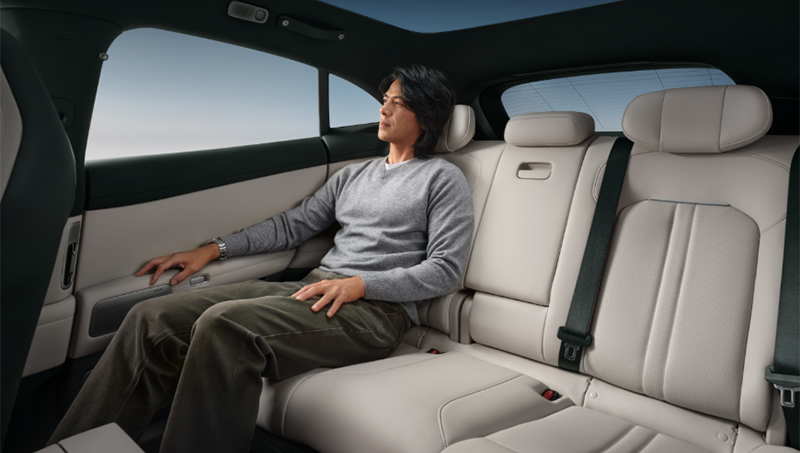
The Xiaomi YU7’s interior space is its natural advantage against the Model Y. Thanks to its larger footprint as a mid‑to‑large SUV, the Xiaomi YU7 measures 4,999 mm long, 1,996 mm wide and 1,608 mm high, with a 3,000 mm wheelbase — 110 mm longer than the Model Y’s 2,890 mm wheelbase, and 76 mm wider. In real‑world testing, rear‑seat legroom for a 180 cm (5’11”) passenger offers about two fists of clearance, and the nearly flat floor means three adults can sit comfortably. The rear seats recline electrically up to 135 degrees, allowing near‑flat relaxation for much‑improved comfort.
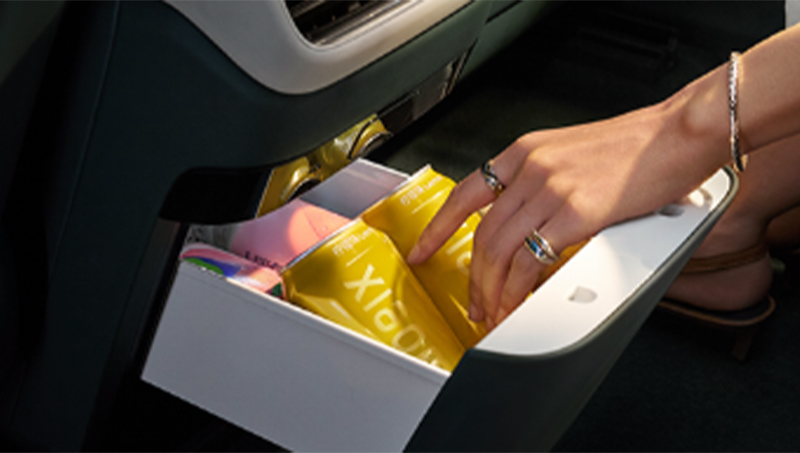
Cargo capacity stands at 678 litres in the standard configuration, with an additional 141‑litre frunk. Folding the rear seats expands total volume to 1,758 litres — enough for camping gear or a baby stroller. The Model Y’s trunk holds about 854 litres including the under‑floor compartment, with flexible storage options and a 116‑litre frunk. But in rear passenger space and absolute cargo volume, the YU7’s larger body gives it the edge for family‑loaded trips. The Xiaomi YU7 Standard edition starts at 233,500 RMB — 30,000 RMB less than the Model Y RWD (263,500 RMB). Moreover, every Xiaomi YU7 comes standard with an 800V platform, offering a significant charging speed advantage: 15 minutes of fast charging adds 405 km of range, compared to 250 km in 15 minutes for the Model Y’s 400V platform.
1. What kind of vehicle is the Xiaomi YU7?
The Xiaomi YU7 is a family of mid‑to‑large all‑electric SUVs from Xiaomi Auto, available in Standard, Pro, Max and high‑performance GT trims. Its core selling points include segment‑above dimensions, potent performance, an 800V high‑voltage platform, and the full Xiaomi HyperOS smart ecosystem. It targets young families seeking a blend of technology and performance in the 230,000–420,000 RMB price range.
2. What are the Xiaomi YU7’s key competitive advantages?
The Xiaomi YU7’s advantages come from a combination of segment‑above dimensions, standard 800V architecture, the HyperOS ecosystem, and a tiered performance lineup:
① A 3,000 mm wheelbase and 1,996 mm width deliver generously roomy rear seats and 1,758 litres of cargo capacity, rivaling MPVs in practicality.
② Every Xiaomi YU7 comes with an 800V silicon carbide platform, LiDAR, an NVIDIA Thor chip, and lifetime free access to advanced autonomous driving and ultra‑fast charging.
③ HyperOS enables seamless connectivity across the human‑vehicle‑home ecosystem, a unique differentiator.
④ 0‑100 km/h times range from 5.88 seconds (Standard) to 4.27s (Pro), 3.23s (Max), and 2.92s (GT) — covering the entire performance spectrum.
⑤ Starting at 233,500 RMB, the YU7 delivers exceptional value in the mid‑to‑large SUV segment.
3. What are the main differences between the Xiaomi YU7 and the Tesla Model Y, and how should I choose?
Dimensions & Space: The Xiaomi YU7 is a mid‑to‑large SUV (3,000 mm wheelbase) with significantly more rear seat and trunk space. The Model Y is a mid‑size SUV (2,890 mm wheelbase) — adequate but less spacious.
Performance: The Xiaomi YU7’s entry model does 0‑100 km/h in 5.88 seconds, the Max in 3.23s and the GT in 2.92s — a segment‑beating performance ladder. The Model Y Performance achieves 3.7 seconds — sufficient for daily use but a clear performance gap.
Smart Cockpit: The Xiaomi YU7 features HyperOS, the Snapdragon 8 Gen 3 platform and seamless Xiaomi IoT integration. The Model Y offers a minimalist design with an AMD chip — excellent energy efficiency but lacking ecosystem depth.
Autonomous Driving: The Xiaomi YU7 comes standard with LiDAR, a 700 TOPS chip, and full urban/highway assist — no subscription, lifetime free. The Model Y’s AI4 chip has higher raw compute, but full urban self‑driving costs an extra 32,000‑64,000 RMB.
Charging Efficiency: The Xiaomi YU7’s standard 800V platform adds 405 km of range in 15 minutes. The Model Y’s 400V platform adds 250 km in 15 minutes.
Price Range: The Xiaomi YU7 Standard starts at 233,500 RMB — 30,000 RMB less than the Model Y RWD, offering clear value advantage.
Choice advice:
Choose the Xiaomi YU7 if you prioritise segment‑above space, standard high‑level autonomous driving, 800V ultra‑fast charging, and the Xiaomi ecosystem.
Choose the Tesla Model Y if you value leading energy efficiency, a proven electric powertrain, globally recognised brand image, and strong resale value.
Advanced Search
Recommended Models
Leapmotor-Leapmotor A10
Updated: Jul,07,2026
ChangAn-CS55 PLUS 2026
Updated: Jul,07,2026
Geely-Galaxy-Geely Galaxy M7
Updated: May,28,2026
Related News
A pioneering creation in the new energ...
Nov,05,2025
Geely Galaxy M9: Reshaping the Large S...
Nov,06,2025
All trims of the Tang L DM are equippe...
Nov,05,2025
What are your thoughts on this car?
* Required Fields