

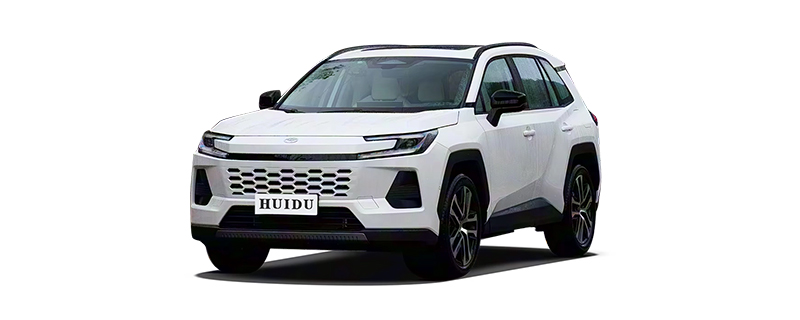
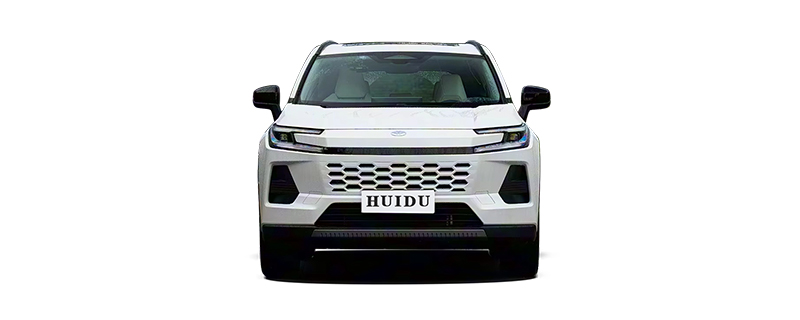
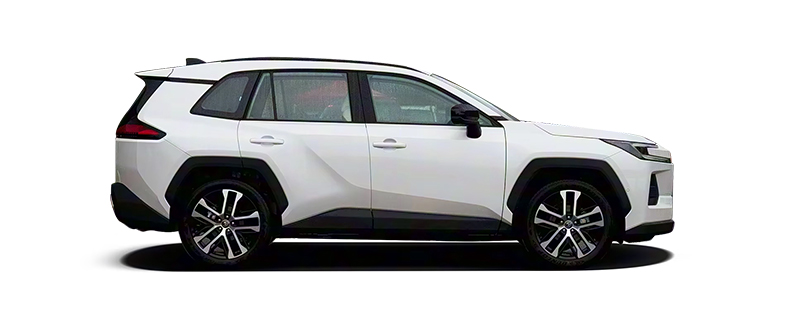
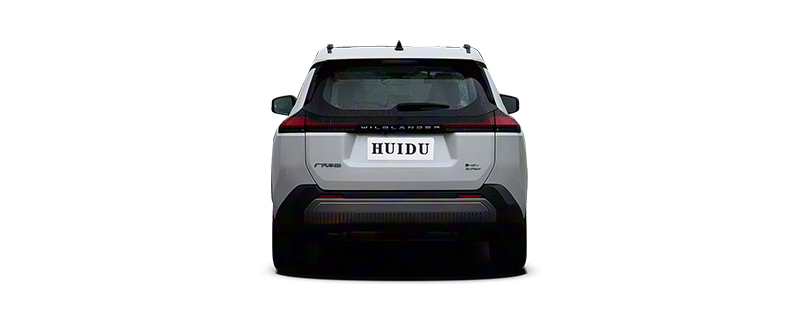
In the compact SUV segment, the rivalry between the Toyota Wildlander and the Mazda CX-5 is a true clash between rational pragmatism and emotional driving pleasure. The Toyota Wildlander aims to redefine the value benchmark for family SUVs in the 150,000–220,000 RMB bracket with Toyota’s fifth-generation THS hybrid system – the epitome of worry‑free efficiency – along with a significantly upgraded smart cockpit and an enduring market reputation. The Mazda CX-5, on the other hand, secures a loyal following of driving enthusiasts with its unmistakable Kodo design, sharp and precise SKYACTIV handling, and the pure, linear “Jinba Ittai” (horse and rider as one) driving feel.
The 2026 Toyota Wildlander offers three powertrains: a 2.0L petrol, a 2.0L intelligent electric hybrid, and a 2.5L intelligent electric hybrid. Taking the most representative 2.0L hybrid as an example, its engine displacement is 1,987 mL with a maximum output of 112 kW. Together with the electric motor, the system’s combined power reaches 160 kW, matched with an E‑CVT transmission. Under WLTC conditions, fuel consumption is as low as 4.59 L/100 km. At low speeds, the electric motor delivers a quiet, silky‑smooth response with no judder. When the accelerator is pressed harder, the engine intervenes seamlessly and naturally. Although it lacks the surge of a turbocharged engine, the power delivery is consistently linear and controllable – more than adequate for daily family use.
By contrast, the 2025 Mazda CX‑5 now offers only a 2.0L naturally aspirated engine, with a displacement of 1,998 mL, maximum output of 114 kW and peak torque of 200 N·m, paired with a six‑speed automatic transmission. While the more powerful 2.5L version has been discontinued, the CX‑5 remains a steadfast guardian of the naturally aspirated ethos. Its power builds linearly as revs climb. If you are willing to push the revs high, the sonorous engine note and the responsive gearbox deliver a far greater sense of driver engagement than the Wildlander.


The new Toyota Wildlander features an upgraded rear double‑wishbone independent suspension and comes standard with an LSD (limited‑slip differential), enabling real‑time torque distribution between the front wheels. This setup balances urban comfort with mild off‑road capability. Meanwhile, the Mazda CX‑5’s SKYACTIV platform employs G‑Vectoring Control (GVC), which subtly modulates engine torque during cornering, keeping the body stable and confidence‑inspiring even under spirited driving. This “human‑and‑car‑as‑one” feel on the road is something Toyota’s long‑pursued “effortless comfort” struggles to match.
The Toyota Wildlander hybrid can achieve a combined range of up to 1,300 km on a single tank of regular 92‑RON petrol, with a running cost of approximately 0.36 RMB per kilometre. The Mazda CX‑5 2.0L petrol version has an NEDC combined fuel consumption of about 7.05–7.15 L/100 km, also on 92‑RON petrol, offering a range of roughly 600–700 km per tank. Although both vehicles use the same refuelling method (petrol), the Toyota Wildlander’s hybrid system delivers a decisive advantage in fuel costs.
“The Toyota Wildlander is the most worry‑free tool – precise and efficient. The CX‑5 is the partner that best understands driving pleasure – elegant and pure. Their competition is essentially a collision of two different life philosophies.”— SUV Market Observer
The Toyota Wildlander’s driving character is centred on “lightness and smoothness.” Thanks to the electric motor’s instant response, it feels extremely brisk in urban starts with no lag. Steering is light, and the chassis retains the substantial, solid feel unique to the TNGA architecture. It filters out most minor road imperfections while offering excellent support during high‑speed cornering, making the overall driving experience relaxed and effortless. Even when the hybrid battery is at a low state of charge, the cabin NVH remains impressive – more refined than many competitors in its class.

The CX‑5 has a different personality. Its chassis feedback is unfiltered and direct – the road feel is so vivid you could almost count the grooves in the asphalt. Precise steering, sharp front‑end response, and the crisp timing of each gearshift make it a joy on winding mountain roads. However, in tight city manoeuvres, the CX‑5’s heavy and somewhat small steering feel can be less friendly to female drivers or novices.
The Toyota Wildlander employs Bosch’s one‑box braking system. In our tests, its 100‑0 km/h braking distance ranged from 35.92 m to 38.73 m. Brake force is released linearly and stably, with smooth electronic stability control intervention. Due to factors such as tyre grip and suspension support, the CX‑5’s average 100‑0 km/h braking distance is about 44 metres. The CX‑5’s brake pedal feel is extremely linear – when you press hard, the deceleration is very uniform, inspiring confidence. Nevertheless, the absolute stopping distance today does show a physical generation gap.
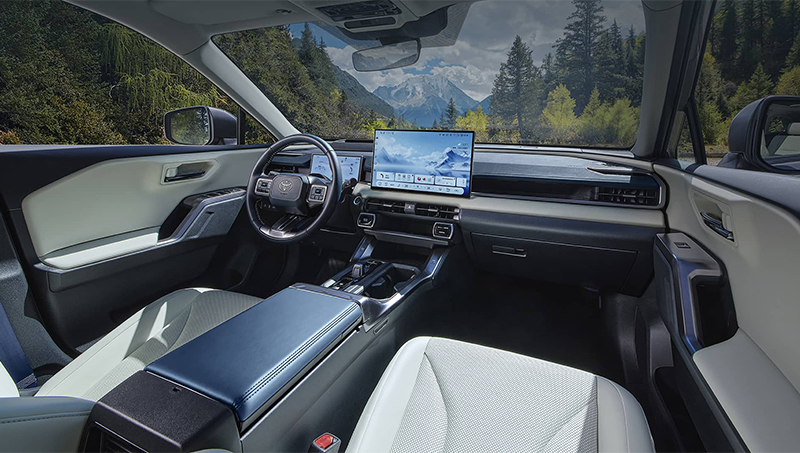
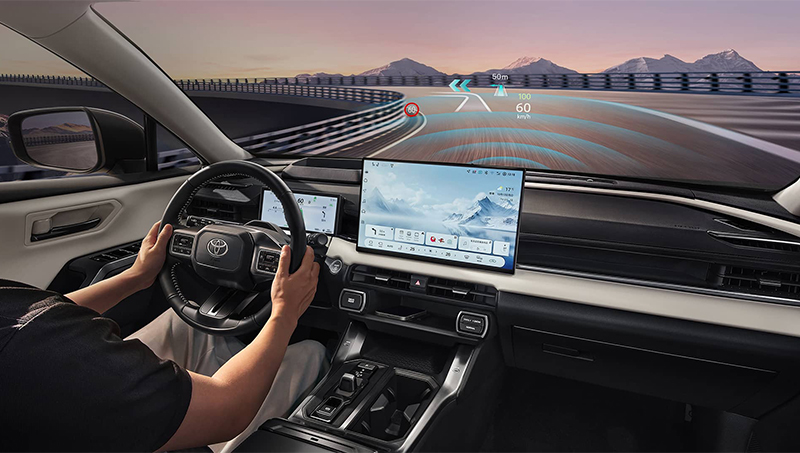
The Toyota Wildlander has undergone a complete revolution in its smart cabin. It comes standard with a Qualcomm Snapdragon 8155P chip and a 15.6‑inch floating centre touchscreen, delivering exceptionally fast operation. The Toyota Safety Sense (TSS) 4.0 is also standard across all trims, utilising 24 sensors to enable full‑speed adaptive cruise control, autonomous emergency braking, and over 200 other intelligent driving features. The Toyota Pilot assisted driving system greatly reduces fatigue on long journeys, and voice control for windows, air conditioning, etc., has become commonplace.
The Mazda CX‑5 stays true to its “driver’s car” philosophy. Its 10.25‑inch floating centre screen is positioned with a touch of anti‑ergonomics – to keep the driver’s eyes on the road, the screen is not touch‑sensitive and is operated only by a central rotary dial. The cabin extensively uses soft materials and stitching, providing excellent tactile quality – a testament to Mazda’s almost obsessive pursuit of craftsmanship.
In terms of intelligent driver assistance, the Toyota Wildlander far surpasses the CX‑5. TSS 4.0 is mature and reliable, both in the breadth of its functions and its real‑world performance. The CX‑5 only offers basic features such as cruise control. The absence of modern driver assistance technologies puts it at a clear disadvantage in long‑distance comfort and safety redundancy.
“Sitting in the Toyota Wildlander’s cabin, you feel the convenience and peace of mind brought by digital technology. Sitting in the CX‑5, you feel the spiritual richness of a driver’s car.”— Editor‑in‑Chief, Drive & Control
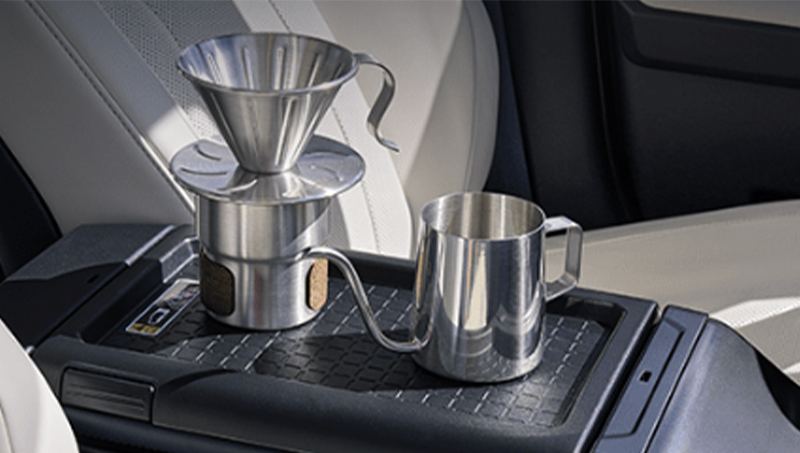
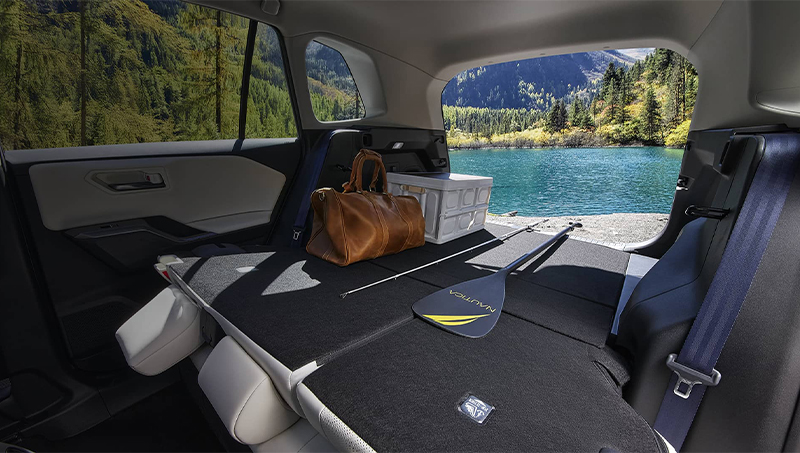
Although the Toyota Wildlander’s body length has been reduced by 65 mm in this mid‑cycle update, clever slim‑profile seat design has actually increased rear legroom by 20 mm. The 580‑litre standard boot capacity easily accommodates the family’s camping gear and children’s toys for a weekend away. Whether it is a short family trip or daily school runs, the Wildlander takes good care of every passenger.
The CX‑5 is more suited to couples or singles. Rear legroom leaves only a fistful of space for passengers taller than 175 cm – not enough for long journeys in comfort. The standard boot capacity is about 490 litres, adequate for daily shopping but a bit tight for multi‑person road trips. That said, Mazda has put considerable thought into seat ergonomics: although space is limited, the cushion length and backrest angle are well judged to minimise fatigue on shorter trips. The CX‑5’s focus is clearly on the quality of the driving and front‑passenger experience, rather than on rear‑seat occupants.
1. What kind of vehicle is the Toyota Wildlander?
The Toyota Wildlander is a mid‑size SUV built by GAC Toyota on the TNGA‑K platform. Leveraging the worry‑free efficiency of Toyota’s fifth‑generation THS hybrid system, a redesigned smart cockpit, and impeccable reliability, it targets family buyers in the 150,000–230,000 RMB segment who prioritise overall value for money.
2. What are the Toyota Wildlander’s core competitive advantages?
Its core strengths lie in the TNGA badge, the standard‑equipped TSS 4.0 across all trims, and outstanding fuel economy:
① Toyota’s reliability halo and high residual value;
② Ultra‑low fuel consumption of 4.59 L/100 km on regular 92‑RON petrol – extremely low running costs;
③ Standard Qualcomm 8155P chip + 15.6‑inch large screen, closing the smart‑feature gap;
④ Rear multi‑link double‑wishbone independent suspension + standard LSD – premium chassis feel;
⑤ A limited‑time starting price of 137,800 RMB, offering excellent value.
3. What are the main differences between the Toyota Wildlander and the Mazda CX‑5, and how should I choose between them?
Powertrain & Driving: Toyota Wildlander – smooth, comfortable, exceptionally fuel‑efficient. CX‑5 – linear, joyful, precise handling.
Smart Technology: Toyota Wildlander – standard 8155P chip + TSS 4.0 full‑scope intelligent driving. CX‑5 – basic infotainment, no advanced driver assistance.
Space & Practicality: Toyota Wildlander – generous rear seat room, well‑shaped boot – far more versatile. CX‑5 – only a fistful of rear legroom; best for couples.
Price Range: The CX‑5’s pure‑petrol entry price is lower (125,800 RMB vs. 137,800 RMB), but you make a clear trade‑off in fuel costs and smart features.
Choice Advice: Choose the Toyota Wildlander if you prioritise long‑distance family comfort, the hybrid’s extreme efficiency, and comprehensive driver assistance. Choose the CX‑5 if you relish the “Jinba Ittai” driving thrill, appreciate a distinctive, high‑quality design, and your use case is mostly solo or dual‑occupancy.
User Comments
Xin: Why can’t the rear seats be moved back a little to increase rear legroom, even at the cost of some boot space?
Q2K: It would be perfect if they improved the details and made the body shell a bit tougher.
Advanced Search
Recommended Models
Leapmotor-Leapmotor A10
Updated: Jul,07,2026
ChangAn-CS55 PLUS 2026
Updated: Jul,07,2026
Geely-Galaxy-Geely Galaxy M7
Updated: May,28,2026
Related News
A pioneering creation in the new energ...
Nov,05,2025
Geely Galaxy M9: Reshaping the Large S...
Nov,06,2025
All trims of the Tang L DM are equippe...
Nov,05,2025
What are your thoughts on this car?
* Required Fields