

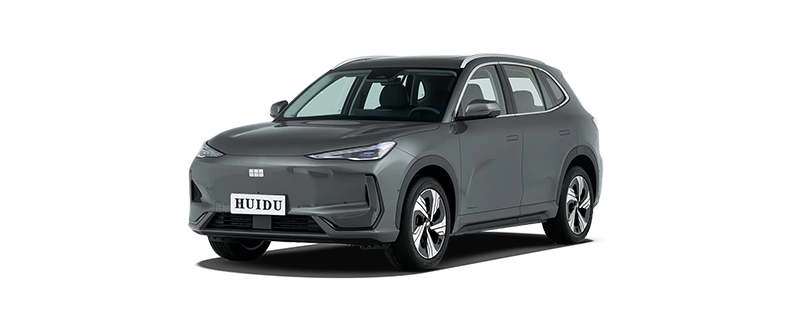
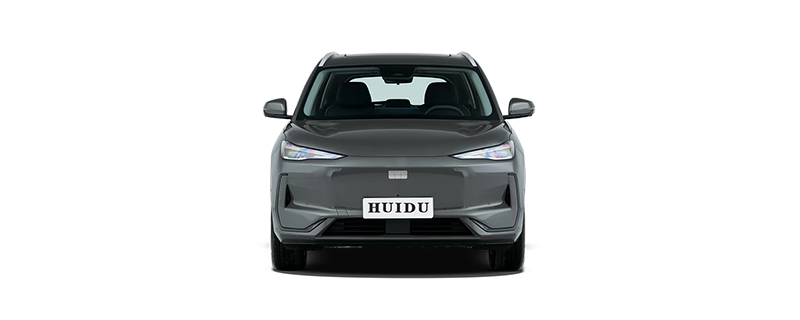
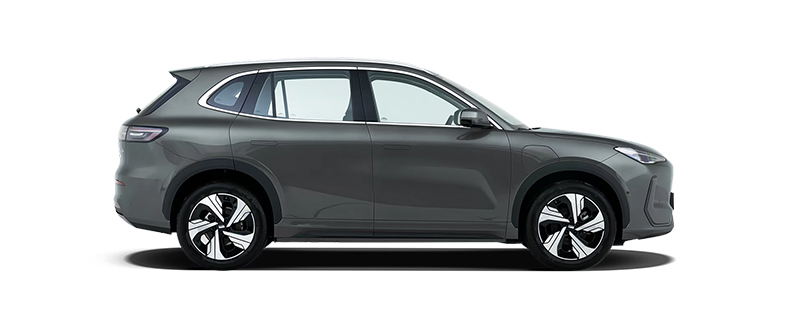
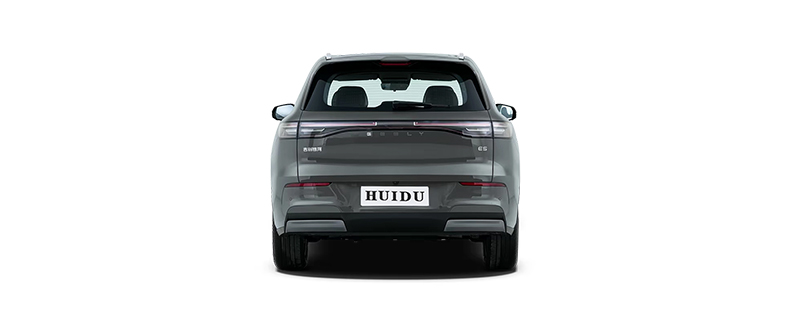
In a 100,000–150,000 RMB (approx. $14,000–$21,000) pure electric SUV segment constantly reshaped by both traditional fuel vehicles and emerging new energy players, the Geely Galaxy E5 has carved out a solid position as an “all-round family car.” With its GEA global intelligent new energy architecture, class-leading range, and Flyme Auto smart cockpit, it aims to redefine the value benchmark for affordable family EVs. In real-world driving, the 2026 Geely Galaxy E5 features a front-mounted permanent magnet synchronous motor delivering 160 kW and 320 N·m of torque, paired with a single-speed EV transmission. The powertrain is tuned primarily for smoothness – the initial throttle response is gentle without any abrupt surge, acceleration is linear and controllable, and even under hard throttle, power delivery remains progressive, avoiding the dizzying jolt common to many EVs. With a 0-100 km/h time of 6.9 seconds, it feels more than capable for city overtaking and highway cruising, never leaving the driver wanting.
By contrast, its main rival, the Deepal S05, offers both pure electric and extended-range (EREV) powertrains. The pure electric version uses a rear-mounted single motor with 175 kW or 200 kW (for the 620 km long-range variant) and 320 N·m of torque, accelerating from 0 to 100 km/h in 6.48 seconds – slightly edging out the Geely Galaxy E5 in power, especially with stronger mid-to-high speed pull. The EREV variant pairs a 1.5L naturally aspirated engine (1,497 mL) acting as a generator (72 kW / 98 hp) with a rear 175 kW motor, giving a combined range of up to 1,310 km. Their driving characters diverge: the Geely Galaxy E5 is a “front-drive, smooth, family-first comfort cruiser,” while the Deepal S05 is a “rear-drive, agile, handling-focused tech-sporty player.”


The 2026 Geely Galaxy E5 is powered by the Shenzhen Shield Gold Brick battery, offering two CLTC ranges: 530 km and 610 km. The 610 km version ups the battery capacity to 68.22 kWh, with excellent energy efficiency – consumption is as low as 11.9–12.1 kWh/100 km, making running costs very low. The Deepal S05 pure electric version provides 520 km and 620 km ranges; the 620 km version packs a 68.8 kWh CATL battery and can fast-charge from 30% to 80% in just 15 minutes, slightly better than the Geely Galaxy E5’s 20 minutes. While both are neck-and-neck on paper range, the Geely Galaxy E5 achieves a higher real-world range realization rate – user tests show around 88%, giving family buyers extra peace of mind.
“The Geely Galaxy E5 is a well-rounded, comfortable, high-value ‘all-round family EV’ with no obvious weaknesses, ideal for families prioritizing range, safety, space, and ride smoothness.” – Auto Market Observer
Settling into the Geely Galaxy E5’s cockpit, the high seating position and 1.9-meter-wide body provide an expansive view. Steering feel is light, with even weighting, making low-speed maneuvering effortless. On city roads, the front MacPherson / rear multilink independent suspension, combined with CTB (cell-to-body) technology and a 50:50 weight distribution, gives a substantial, premium ride quality. For 2026, damping performance has been improved by about 20% – the car absorbs speed-bump impacts well, with crisp suspension action. On rough, broken roads, the softer suspension tuning filters out vibrations completely; paired with the plush seats, the “big-boat” comfort helps prevent motion sickness among family members.
The Deepal S05, built on a pure electric rear-drive platform, also has near 50:50 weight distribution. Its front MacPherson / rear five-link independent suspension allows more precise wheel control over bumps, reducing residual vibrations. With 225/60 R18 high‑aspect‑ratio tires, rear-seat passengers feel only mild impacts over speed bumps and potholes – some users report that even a cup of water barely spills on badly maintained roads. Through high-speed corners, the five-link setup improves body composure, with modest lean. The rear-drive layout truly shines in bends, offering significantly more driving fun than the Geely Galaxy E5, with better tail compliance – a feeling hard to replicate with front‑drive cars.

The Geely Galaxy E5’s front-drive layout feels more stable during low-speed starts and turns, with a planted, substantial ride. In Comfort mode, steering is light, but during fast corners the body leans noticeably due to the soft suspension. Sport mode only sharpens throttle response; it cannot change the fundamental softness – some owners even describe the car “bouncing two or three times after a big bump” before settling. The steering system is artificially weighted, feeling a bit light at highway speeds, lacking the linear speed‑sensitive weighting of the Deepal S05’s electric power steering. Official moose test result is 78 km/h – commendable for a family SUV. Braking is linear and stable, with a claimed 100-0 km/h distance of 35 meters; the electronic stability system intervenes smoothly, among the best in its price class. The Deepal S05 also uses front ventilated discs and rear solid discs with 225/60 R18 tires, offering smooth everyday deceleration, though no independent third‑party 100-0 km/h test results are yet available.
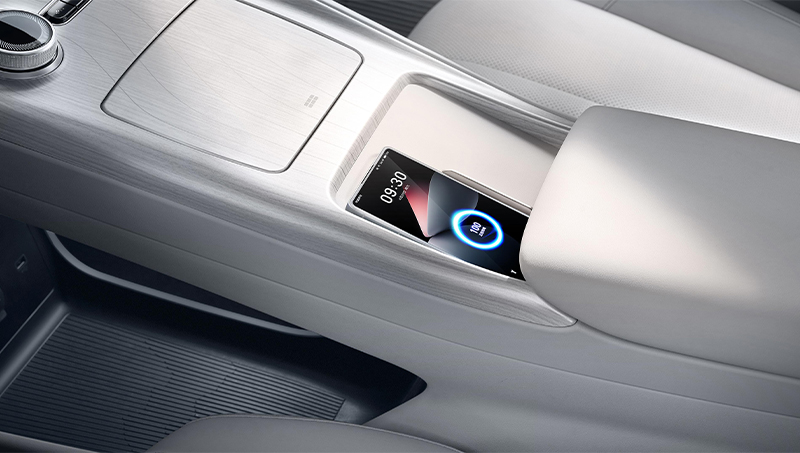
The Geely Galaxy E5’s cabin follows a clean, tech‑minimalist style. A 10.2‑inch digital instrument cluster and a 15.4‑inch floating central touchscreen form the core interface, powered by Geely’s 7nm automotive‑grade “Dragon Eagle‑1” chip and Flyme Auto. The card‑based UI logic is close to a smartphone, with smooth operation, clear menu hierarchy, and no lag. There are 33 storage compartments across the cabin, including a 14L hidden drawer under the rear seats for umbrellas, snacks, etc. The trunk offers 461L, plus a 51L under‑floor compartment with wet/dry separation – thoughtful details for daily life. Front seats come with ventilation, heating, and massage; the rear seats have adjustable backrest angles, and the center armrest includes 50W wireless charging. The top trim features a 16‑speaker sound system with headrest speakers, separating navigation prompts from entertainment – long‑distance drives with navigation on won’t disturb passengers listening to music.
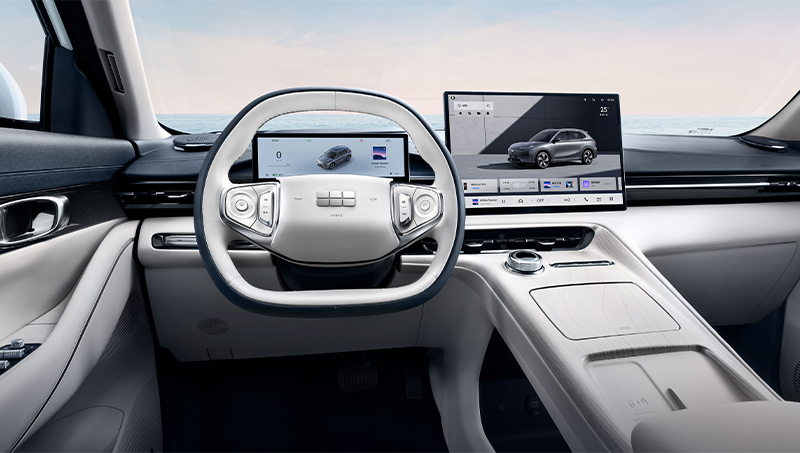
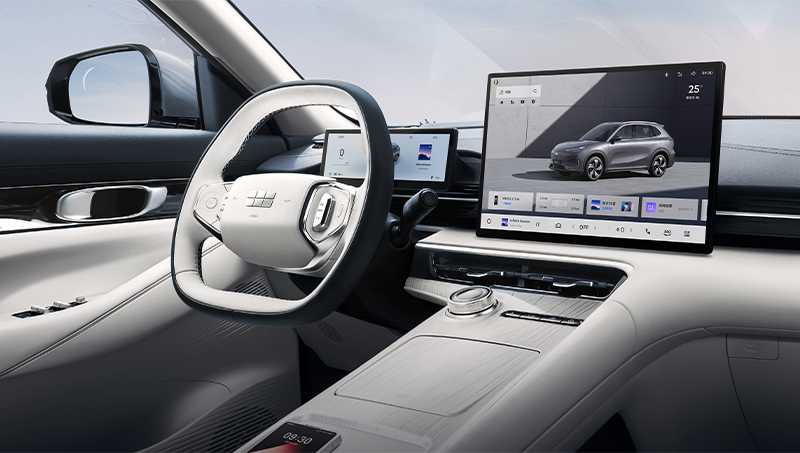
The Deepal S05 takes a more extreme minimalist approach, with a 15.4‑inch floating screen and a flat‑bottom steering wheel. The Qualcomm Snapdragon 8155 drives the DEEPAL OS 3.1 system, which integrates a DeepSeek R1 large language model for AI chat and other interactive experiences – among the smartest in its class. Comfort features: mid‑ and high‑trims offer front seat heating, ventilation, and leg rests; the rear seats have extended cushions for better thigh support. The 2026 620 km long‑range version supports 6 kW V2L (vehicle‑to‑load) – great for camping. The frameless doors and low‑slung profile add sportiness, but at highway speeds wind noise is slightly more pronounced than in the Geely Galaxy E5, with somewhat less rear‑seat quietness.
ADAS: The Geely Galaxy E5 comes standard with Level 2 driving assistance, including full‑speed adaptive cruise (0-150 km/h), lane centering, emergency lane keep, intelligent speed limit recognition, and APA auto parking – mature and stable, with no extra cost for “future features.” The Deepal S05 also has standard L2, with a hardware suite of 5 mmWave radars, 5 cameras, and 12 ultrasonic sensors, including an 8MP front camera. It supports highway navigation assist, automatic lane change assist, smart offset, and remote parking, with an average parking time of about 35 seconds. In terms of hardware redundancy and feature richness, the Shenlan S05 leads, but the Geely Galaxy E5 wins on system maturity and out‑of‑the‑box usability.
“Step into the Geely Galaxy E5, and you feel the thoughtful storage solutions and warmth for family travel. Step into the Deepal S05, and you feel the cutting‑edge tech from stacked hardware, plus the composed rear five‑link suspension over rough roads.” – Driving & Style Editor
Space is the Geely Galaxy E5’s core selling point. Dimensions: 4,615×1,901×1,670 mm, wheelbase 2,750 mm. While the numbers aren’t class‑leading, the GEA architecture and CTB technology achieve a remarkable 67.2% “roominess ratio.” Rear knee room is generous – a 180 cm passenger has more than two fists of legroom. Rear seatbacks are adjustable, reducing fatigue on long trips. The 33 storage bins are rare in this class; the hidden drawer under the rear seats and the wet/dry under‑floor trunk bin mean family travel gear (baby items, drinks, snacks) all find a dedicated spot. Trunk capacity is 461L, expanding to 1,877L with seats folded – enough for moving or camping. In space utilization, the Geely Galaxy E5 sets a benchmark for ingenious storage.
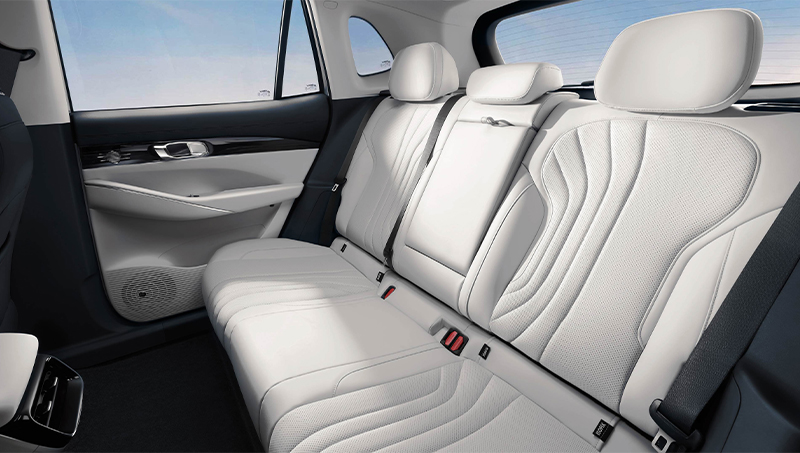
The Shenlan S05 measures 4,620×1,900×1,600 mm, with a 2,880 mm wheelbase – more longitudinal space than the Geely Galaxy E5, offering even better rear legroom for 180 cm passengers. Trunk capacity is 492L, and the pure electric version adds a 159L frunk – an extra edge for family trips. However, its storage cleverness isn’t on par with the Geely Galaxy E5, lacking details like the rear‑seat drawer. For headroom, the Geely Galaxy E5’s taller body and squared‑off roof provide more generous vertical space – if all family members are tall, the Geely Galaxy E5 is more practical.
“The Geely Galaxy E5 is truly a high‑value product, at least for now. Compared to the BYD Yuan Plus, its suspension is more comfortable, and its spacious, flexible interior combined with an attractive price makes it a compelling new choice in this segment.” – Automotive Journalist Zhao Xuancheng
1. What kind of vehicle is the Geely Galaxy E5?
The Geely Galaxy E5 is a compact pure electric SUV under Geely’s Galaxy series, built on the GEA global intelligent new energy architecture. The 2026 model year went on sale in July 2025. With GEA, CTB technology, Flyme Auto smart cockpit, and up to 610 km range, it targets family buyers in the 100,000–150,000 RMB bracket who value comfort, safety, space, and ride smoothness.
2. What are the Geely Galaxy E5’s core competitive advantages?
Key strengths: long range + CTB architecture + Flyme Auto cockpit + ingenious storage. Specifically:
610 km CLTC range with consumption as low as 11.9–12.1 kWh/100 km – very low running costs.
GEA global architecture + CTB gives a 67.2% roominess ratio and a class‑leading substantial ride.
Flyme Auto + Dragon Eagle‑1 chip delivers smartphone‑like smooth infotainment.
33 storage compartments + rear under‑seat drawer + 51L hidden wet/dry trunk bin – family details done right.
Starting price of 109,800 RMB, with standard multilink rear suspension and Level 2 ADAS – outstanding value.
3. What are the main differences between the Geely Galaxy E5 and the Deepal S05, and how to choose between them?
Drivetrain: Geely Galaxy E5: front‑drive, stable starts, predictable cornering. Shenlan S05: rear‑drive, agile, more dynamic cornering.
Performance: Deepal S05’s motor power and 0‑100 km/h time are slightly better, with stronger mid‑range pull.
Suspension & ride: Geely Galaxy E5: rear multilink, soft tuning focused on comfort, good bump absorption but more body roll at speed. Deepal S05: rear five‑link, balancing comfort and sportiness, better lateral support.
Smart cockpit: Geely Galaxy E5: Flyme Auto + Dragon Eagle‑1, clean and smooth. Deepal S05: Snapdragon 8155 + DeepSeek LLM, richer AI interaction.
ADAS: Deepal S05 has more hardware redundancy, supports highway NOA (navigation on autopilot). Geely Galaxy E5 offers practical, mature Level 2; base model has only cruise control.
Space & storage: Geely Galaxy E5 excels in storage cleverness and practicality. Deepal S05 has longer wheelbase, roomier legroom.
Choice advice:
Choose the Geely Galaxy E5 if you prioritize rear‑seat comfort, brilliant storage, real‑world range confidence, and mature, proven systems.
Choose the Deepal S05 if you prefer rear‑drive driving fun, stronger performance, and are willing to pay for features like highway NOA.
User Comment
G93: The drawback of EVs is that you can’t drive too fast – excessive speed drains the battery quickly. Keep a steady speed around 100 km/h. Once you go over 100 km/h, power consumption climbs sharply.
Advanced Search
Recommended Models
Leapmotor-Leapmotor A10
Updated: Jul,07,2026
ChangAn-CS55 PLUS 2026
Updated: Jul,07,2026
Geely-Galaxy-Geely Galaxy M7
Updated: May,28,2026
Related News
A pioneering creation in the new energ...
Nov,05,2025
Geely Galaxy M9: Reshaping the Large S...
Nov,06,2025
All trims of the Tang L DM are equippe...
Nov,05,2025
What are your thoughts on this car?
* Required Fields