

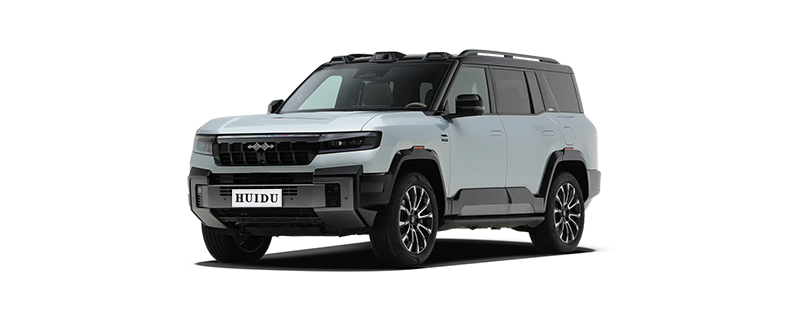
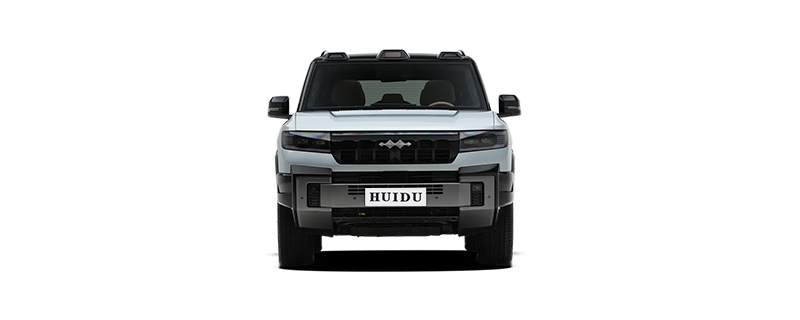
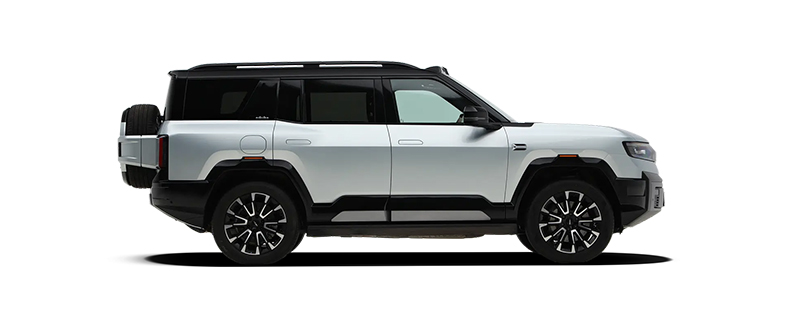
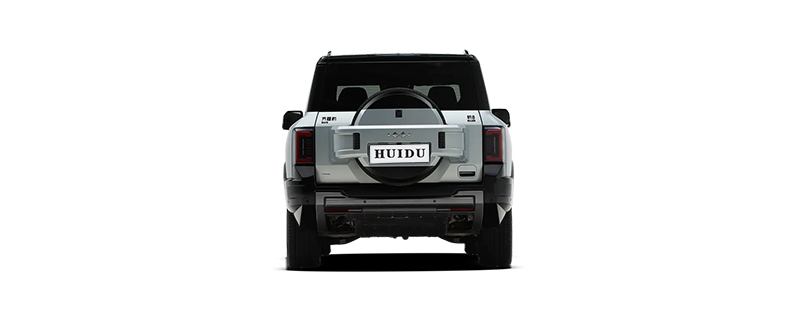
For years, the 400,000–500,000 RMB hardcore SUV segment has been dominated by the Toyota Prado, buoyed by its legendary “unbreakable” reputation and its status as an off-road icon. Enter the Formula Leopard 8 – a bold entrant that positions itself as an “intelligent flagship of the hardcore off-road” class. Built on BYD’s DMO Super Hybrid Off-Road Platform, the Formula Leopard 8 seeks to redraw the value benchmark for premium off-road SUVs with a body‑on‑frame construction, triple differential locks, blistering 4.8‑second 0‑100 km/h acceleration, and the intelligent empowerment of Huawei’s Qiankun ADS 3.0 autonomous driving system.
In real‑world driving, the Formula Leopard 8’s plug‑in hybrid system pairs a longitudinal 2.0L turbocharged engine (1,997 cc) with front and rear electric motors. The engine delivers 180 kW (245 hp) and 380 N·m of peak torque; the front motor contributes 200 kW / 360 N·m, while the rear motor adds 300 kW / 400 N·m. Combined system output stands at an impressive 550 kW (748 hp) and 760 N·m of torque. Throttle calibration prioritises smoothness – initial response is gentle and linear, yet a firm push unleashes the instantaneous surge of torque, catapulting this 3,296‑kg behemoth forward. The official 0‑100 km/h time is just 4.8 seconds – remarkable for a ladder‑frame off‑roader measuring nearly 5.2 metres in length, far from a city SUV.


By contrast, the 2026 Toyota Prado employs a 2.4L turbocharged engine with a P2 motor hybrid architecture (2,393 cc). The engine produces 207 kW (282 hp) and 430 N·m, while the system’s combined output is 243 kW (330 hp) and 630 N·m. Mated to an 8‑speed automatic transmission, it returns a WLTC fuel consumption of 10.11 L/100 km. The Prado’s powertrain is renowned for its linear, smooth delivery – the electric motor assists low‑speed starts and the engine engagement at mid‑to‑high speeds is seamless – but its absolute power reserve lags significantly behind the Formula Leopard 8, whose combined power more than doubles that of the Prado.
In terms of range, the Formula Leopard 8 is equipped with a 36.8 kWh FinDreams blade battery, delivering a WLTC pure‑electric range of 100 km and a comprehensive range of 1,200 km. It supports 120 kW DC fast charging. The Prado, as a non‑plug‑in hybrid, offers no pure‑electric capability and relies on a 65‑litre fuel tank for approximately 600–700 km of range, making it less flexible in long‑distance overlanding scenarios where refuelling options may be limited.
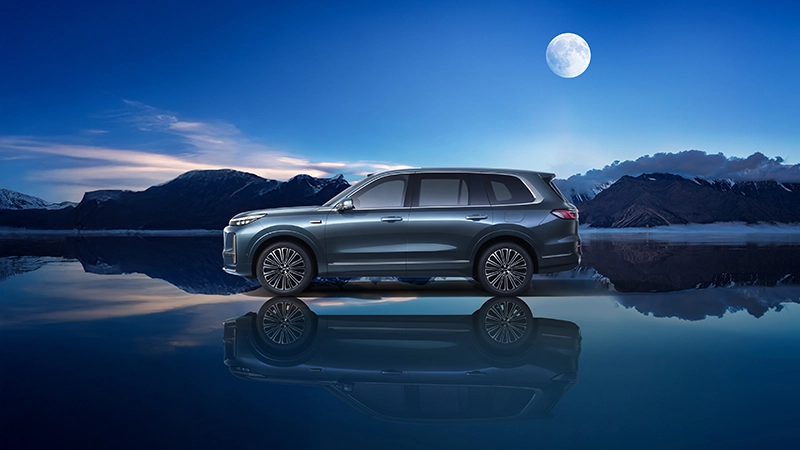
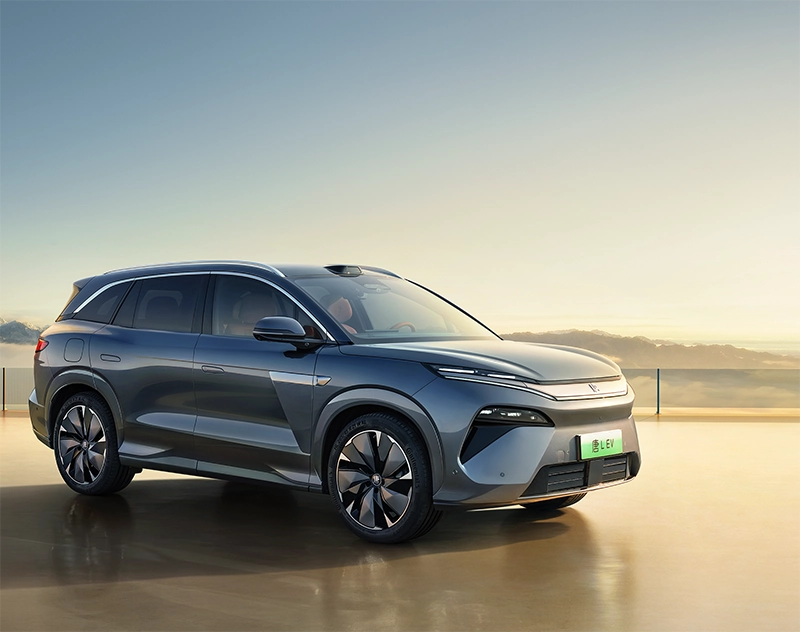
“The Formula Leopard 8 adopts a futuristic mech‑styled aesthetic with sharp, angular lines; the Prado is more like a gentleman in a well‑tailored suit – seemingly conservative, yet those who know recognise its enduring pedigree.”
Settling into the Formula Leopard 8’s cockpit, the elevated seating position and boxy silhouette instil a commanding presence. Its dimensions – 5,195 mm long, 1,994 mm wide, and 1,905 mm tall, with a 2,920 mm wheelbase – are generous. The body‑on‑frame chassis is suspended by double‑wishbone independent suspension at both front and rear. Higher‑spec variants are equipped with the full‑function Yunpian‑P intelligent hydraulic body control system, offering 140 mm of suspension stroke adjustment, three‑stage stiffness adjustment, and active damping continuous control. At its highest setting, the approach angle reaches 34°, departure angle 35°, ground clearance rises to 310 mm, and maximum wading depth is 900 mm.
During everyday driving, the vehicle is predominantly propelled by electric motors, delivering swift and responsive acceleration that fundamentally alters the traditional “large‑displacement, turbo‑lag” character of conventional off‑roaders. The ladder‑frame construction often suffers from a disconnect between chassis and body dampening, yet the Yunpian‑P system, which uses LiDAR and cameras to anticipate road imperfections – potholes, texture changes – and proactively adjusts damping, delivers ride comfort on par with that of a city SUV. The cabin quietness is equally impressive: electric‑only operation in urban settings is exceptionally hushed, and engine intrusion, when it occurs, is minimal. The Formula Leopard 8 also debuts an intelligent triple‑lock system that rapidly detects wheel speed differentials and engages or disengages locking instantaneously, completely overturning the manual operation logic of mechanical locks.

The Prado, built on Toyota’s TNGA‑F platform, features a body‑on‑frame structure with a front double‑wishbone and rear four‑link coil‑spring solid axle suspension. Its chassis tuning centres on “overlanding reliability” – long suspension travel and a firm, well‑damped feel that has been refined over decades for rough surfaces. When cornering at speed, the Formula Leopard 8’s Yunpian‑P system effectively curbs body roll, though the inherent physics of a ladder‑frame vehicle mean neither is a corner‑carving specialist – in this regard, both converge on similar limitations.
The Formula Leopard 8 is fitted with ventilated disc brakes front and rear, with tyre specifications of 275/55 R20. Official 100–0 km/h braking distances are yet to be published by third‑party testers, but based on the Bao 5’s 41.72‑metre performance on the same platform, the Formula Leopard 8 is expected to achieve figures in the 41‑ to 42‑metre range – a commendable result given its near‑3.3‑tonne kerb weight. The Prado also uses ventilated discs, with tyre size 265/65 R18. With limited regenerative braking capacity in its non‑plug‑in hybrid system, the Prado relies more heavily on mechanical friction, leading to a fundamental difference in brake thermal management compared to the Formula Leopard 8’s motor‑based recuperation.
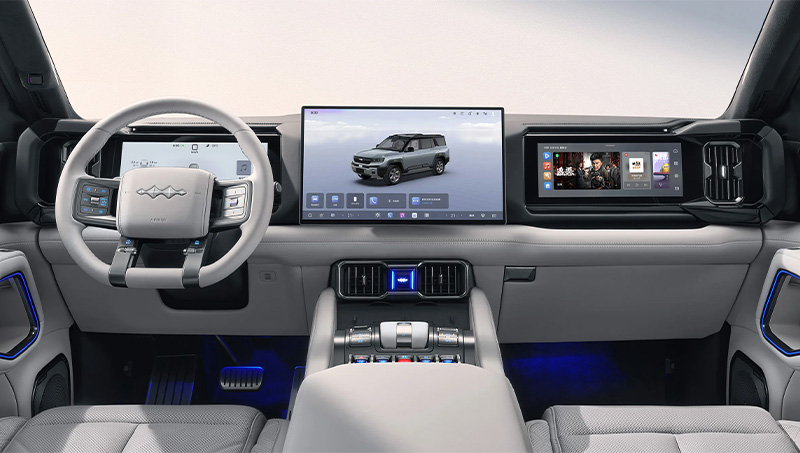
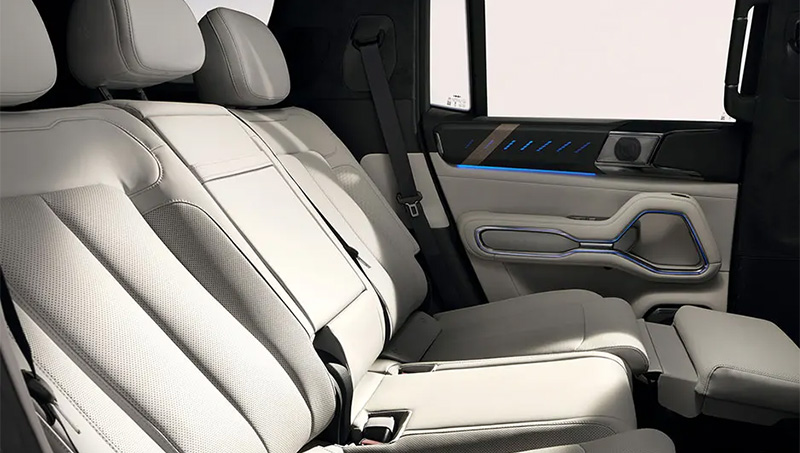
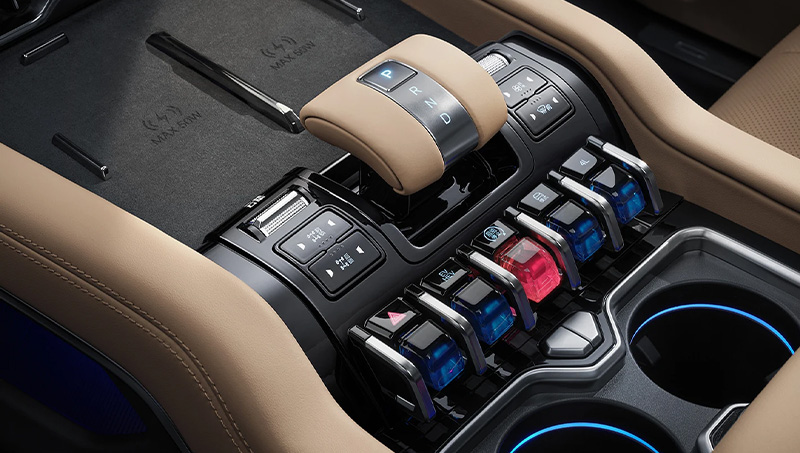
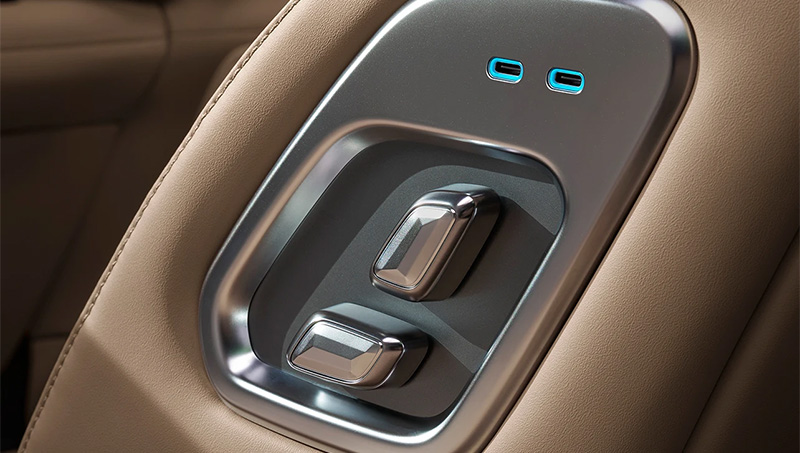
The Formula Leopard 8’s cabin departs sharply from the coarse interiors traditionally associated with hardcore SUVs. Its centrepiece is the seven‑screen DiLink 150 intelligent cockpit, complemented by an 18‑speaker Devialet sound system, 128‑colour ambient lighting, an onboard compressor refrigerator, and power‑adjustable seats for all rows. Extensive soft‑touch surfacing and meticulous stitching create a luxurious atmosphere while retaining an unmistakable off‑road character. The Formula Leopard 8’s sharpest competitive edge lies in its autonomous driving capabilities: it is the world’s first hardcore SUV to integrate Huawei’s Qiankun ADS 3.0, enabling end‑to‑end navigation from parking space to parking space, and supporting seamless unlock across Android, iOS, and HarmonyOS. This is supported by 11 cameras, 3 millimetre‑wave radars, 12 ultrasonic sensors, and a 192‑line Huawei LiDAR unit.
The Prado’s interior adopts a “practical plus technological” approach – higher trims include a 12.3‑inch digital instrument cluster and a floating centre touchscreen, while physical controls and a mechanical gear lever remain, along with multi‑platform smartphone connectivity. Toyota’s TSS (Toyota Safety Sense) is standard. Its design philosophy centres on “foolproof” operation in harsh environments – large buttons, intuitive blind operation, and reliability prioritised above all else.
“Sitting inside the Formula Leopard 8, you experience the convergence of hardcore off‑road capability and Huawei’s advanced driver assistance; stepping into the Prado, you feel decades of off‑road experience distilled into a reassuring sense of dependability.” – Chief Editor, Driving Dynamics
Space is a key advantage of the Formula Leopard 8. Its 5,195‑mm length and 2,920‑mm wheelbase translate into generous passenger accommodation, available in 6‑ or 7‑seat configurations. While the body‑on‑frame construction and complex suspension do encroach on cabin volume, the Formula Leopard 8’s sheer size more than compensates. The third‑row seating is notably more usable than that of the Prado – the latter’s third row, when folded, leaves a pronounced hump that prevents a flat load floor, a persistent criticism since the new Prado’s launch. The Formula Leopard 8’s boot retains substantial capacity even with all seats occupied, and folding the rear seats creates a vast flat loading area.
The Prado measures roughly 4,925 mm long, 1,980 mm wide, and 1,930 mm tall, with a 2,850‑mm wheelbase. It is offered exclusively with 5 seats. Both length and wheelbase are shorter than those of the Formula Leopard 8 by about 270 mm and 70 mm, respectively. The Prado’s space philosophy is “good enough” – adequate for basic overlanding needs, but its third‑row practicality falls far short of the Formula Leopard 8’s.
The Formula Leopard 8 offers an “all‑in‑one” proposition – plug‑in hybrid efficiency, Huawei’s autonomous driving, Yunpian‑P suspension, triple locks – all bundled from the factory. The Prado represents a “long‑termist” choice – strong resale value, easy servicing, and unwavering reliability in extreme conditions. Opting for the Formula Leopard 8 means you are willing to pay a premium for Huawei’s ADAS, 4.8‑second sprint, and fuel‑saving plug‑in hybrid; choosing the Prado signals that you place Toyota’s proven dependability and high retention at the top of your priorities.
1. What kind of vehicle is the Formula Leopard 8?
The Formula Leopard 8 is BYD’s flagship super‑hybrid hardcore SUV under its Fangchengbao sub‑brand, winner of the 2025 Red Dot Design Award. Its core offerings include a body‑on‑frame construction, the DMO Super Hybrid platform, the Yunpian‑P intelligent hydraulic body control system, and Huawei Qiankun ADS 3.0, targeting buyers in the 400,000–500,000 RMB segment who seek a fusion of off‑road capability and cutting‑edge technology.
2. What are the Formula Leopard 8’s core competitive advantages?
Its distinct competitive edge lies in the combination of the DMO platform, Huawei’s autonomous driving, and Yunpian‑P suspension:
Body‑on‑frame chassis + front and rear double‑wishbone + intelligent triple locks – full off‑road hardware.
550 kW / 760 N·m and 4.8‑second 0‑100 km/h – class‑leading performance.
Huawei Qiankun ADS 3.0 – world’s first hardcore SUV with parking‑to‑parking navigation capability.
Yunpian‑P intelligent hydraulic system – 140 mm suspension travel adjustment and 900‑mm wading depth.
36.8 kWh blade battery + 1,200 km combined range – low‑cost daily commuting even for an off‑roader.
3. What are the main differences between the Formula Leopard 8 and the Prado, and how should one choose?
Performance: Formula Leopard 8 – 550 kW / 4.8 sec, overwhelming; Prado – 243 kW, smooth and reliable.
Technology: Formula Leopard 8 – Huawei Qiankun ADS 3.0 + seven‑screen cockpit; Prado – TSS, basic functions.
Suspension: Formula Leopard 8 – Yunpian‑P with 140‑mm adjustment and three‑stage stiffness; Prado – conventional mechanical suspension.
Electric range: Formula Leopard 8 – 100 km pure electric + 1,200 km combined; Prado – no pure‑electric capability.
Third row: Formula Leopard 8 – fold‑flat; Prado – third row protrudes when folded, not flat.
Price range: Formula Leopard 8 – 379,800–427,800 RMB; Prado – 399,800–559,800 RMB.
Selection advice: Choose the Formula Leopard 8 if you prioritise Huawei’s intelligent driving, explosive performance, and low fuel consumption. Choose the Toyota Prado if you value proven off‑road reliability, high resale value, and an extensive after‑sales network.
User Comments
Che: “Long‑distance overlanding has always been plagued by range anxiety – the Formula Leopard 8’s hybrid range is ideal for road trips across Xinjiang.”
Shang: “Navigating the Tianshan mountains and various pastoral tracks, the range remained consistently accurate without any overstatement.”
Advanced Search
Recommended Models
Leapmotor-Leapmotor A10
Updated: Jul,07,2026
ChangAn-CS55 PLUS 2026
Updated: Jul,07,2026
Geely-Galaxy-Geely Galaxy M7
Updated: May,28,2026
Related News
A pioneering creation in the new energ...
Nov,05,2025
Geely Galaxy M9: Reshaping the Large S...
Nov,06,2025
All trims of the Tang L DM are equippe...
Nov,05,2025
What are your thoughts on this car?
* Required Fields