

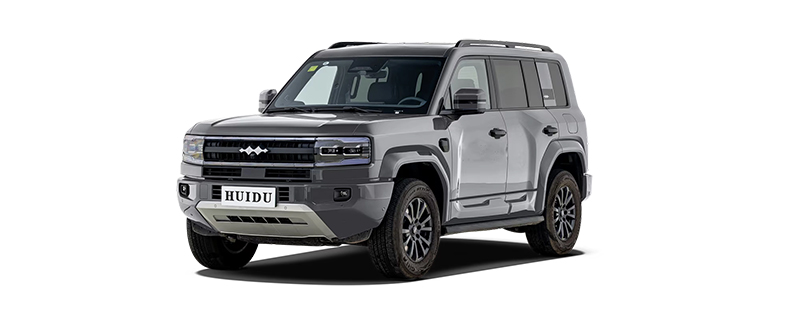
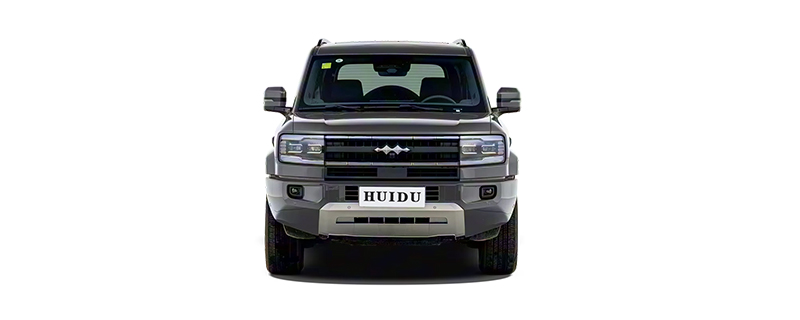
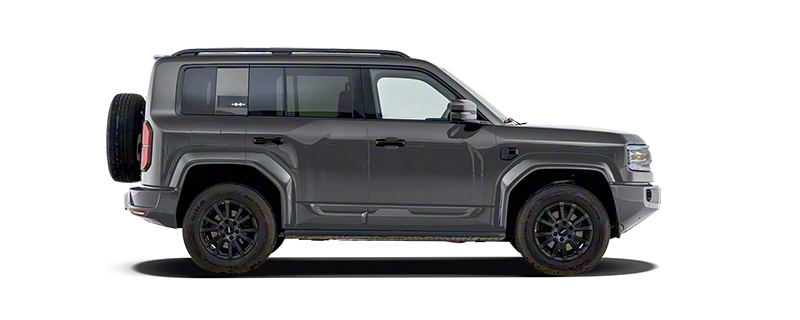
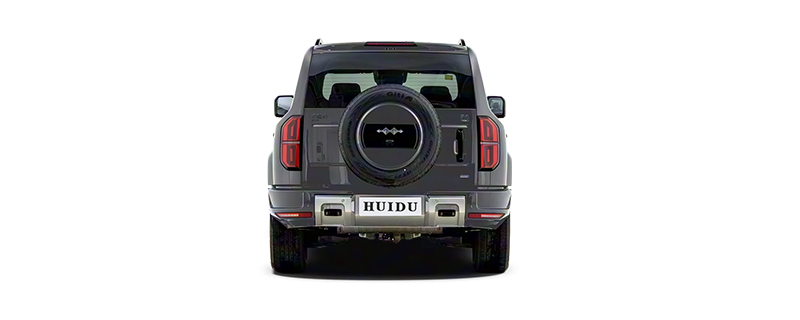
At a time when the 250,000–350,000 RMB segment for rugged new‑energy SUVs is largely dominated by models such as the Tank 300 Hi4‑T, the Formula Leopard 5 makes a forceful entry as a “performance benchmark.” As the first production vehicle built on BYD’s DMO (Dual‑Mode Off‑road) super‑hybrid off‑road platform, the Formula Leopard 5 seeks to redefine the value proposition of hard‑core off‑road SUVs with its body‑on‑frame construction, three differential locks, and a blistering 0‑100 km/h sprint of just 4.8 seconds.
Behind the wheel, the Formula Leopard 5 is powered by a longitudinal 1.5‑litre turbocharged engine (1,497 cc) paired with front and rear electric motors in a plug‑in hybrid arrangement. The internal‑combustion unit delivers 143 kW (194 hp) and 273 N·m of peak torque, while the front motor contributes 200 kW / 360 N·m and the rear motor 285 kW / 400 N·m. Combined system output reaches 505 kW (687 hp) and 760 N·m of torque. The throttle calibration prioritises smoothness – initial response is gentle and linear, yet a firm push unleashes the full torrent of electric torque, hurling this 2,890‑kg behemoth forward with authority. The official 0‑100 km/h time is 4.8 seconds – remarkable for a ladder‑frame off‑roader, not a city‑oriented crossover.


By comparison, the Trumpchi Yue 7 employs a 1.5‑litre turbo engine and electric motor in a plug‑in hybrid system; its engine produces 125 kW (approx. 170 hp) and 245 N·m, while the drive motor peaks at 205 kW, giving the all‑wheel‑drive version a combined 400 kW and a 4‑second‑class 0‑100 km/h time. Both vehicles use 1.5‑litre engines, but the Formula Leopard 5’s dual‑motor setup yields a significantly higher total output.
In terms of range, the Formula Leopard 5 is equipped with a 31.8 kWh lithium‑iron‑phosphate battery pack, offering a CLTC pure‑electric range of 125 km. It supports 100 kW DC fast charging, replenishing from 30% to 80% in just 16 minutes, while the combined range extends to 1,200 km. The Yue 7 offers two battery options – 28.3 kWh and 45.975 kWh – corresponding to pure‑electric ranges of 116 km and 188 km respectively. For daily commuting, the Formula Leopard 5’s 125‑km electric range is more than adequate for the majority of urban trips.
“The Formula Leopard 5 is built on the DMO hybrid off‑road platform and features a 1.5‑litre turbo engine plus front and rear electric motors, with a combined 687 hp and 760 N·m of torque. All three variants achieve the same 4.8‑second zero‑to‑hundred time.” – Official statement
Settling into the Formula Leopard 5’s cabin, the high seating position and squared‑off bodywork instil a strong sense of command. The chassis is a body‑on‑frame design with double‑wishbone independent suspension at both front and rear – a combination typically reserved for serious off‑roaders. Higher‑trim models feature the Yunian‑P intelligent hydraulic body‑control system, which offers adaptive height adjustment, damping control, and four‑wheel interconnected tuning, enabling functions such as trail‑mode obstacle clearance and camping‑level levelling.
In everyday driving, the majority of operating conditions are handled by the electric motors, resulting in instantaneous and responsive throttle behaviour. Traditional hard‑core SUVs often suffer from lag due to large displacements and turbo spool‑up times, but the electrified drivetrain elevates the driving experience to a new level. Ladder‑frame vehicles frequently exhibit a discordant feel between the chassis and body, yet the Formula Leopard 5 avoids this – overall ride comfort is remarkably close to that of a city SUV. Noise insulation is another pleasant surprise: with electric drive most of the time, urban driving is exceptionally quiet, and engine intrusion during hybrid operation is barely perceptible.

The Yue 7, by contrast, adopts an embedded‑frame construction with a multi‑loop, closed‑loop torsional‑resistance structure – a design that seeks to balance off‑road rigidity with on‑road comfort. This results in a more refined ride quality on paved surfaces compared with traditional body‑on‑frame vehicles. When cornering briskly, the Formula Leopard 5’s Yunian‑P system effectively curbs body lean, though the inherent physical constraints of a ladder‑frame chassis mean it will never be a cornering weapon.
The Formula Leopard 5 is equipped with ventilated disc brakes front and rear. Given its near‑three‑tonne curb weight and tyre selection biased toward economy and durability, the measured 100‑0 km/h braking distance is 41.72 metres. Notably, all ten test stops returned consistent figures, hovering around 41 metres, with stable pedal feedback and reassuring deceleration. The Trumpchi Yue 7 has yet to release official braking data; however, given its boxy profile and considerable mass, a conventional brake setup would likely yield a distance in excess of 40 metres.
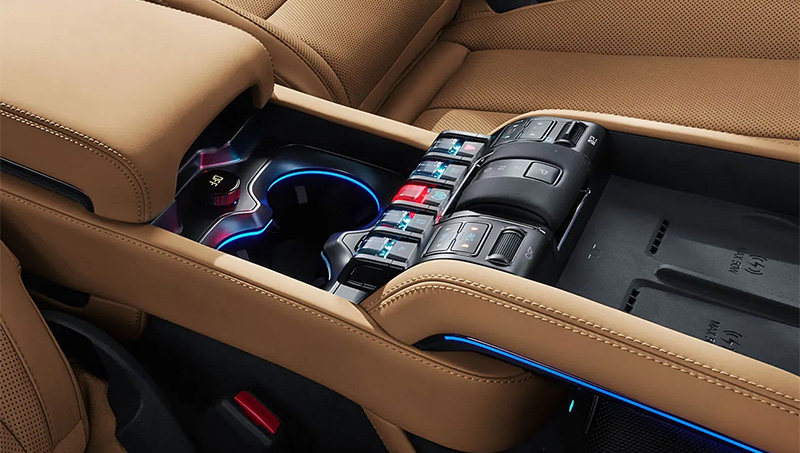
The Formula Leopard 5’s cabin departs decisively from the spartan, utilitarian interiors of traditional off‑roaders. Extensive soft‑touch surfacing and perforated upholstery materials feel premium to the touch. The seats are noticeably softer than typical for this class, generously padded, and the rear backrests offer a wide recline angle, allowing a near‑recumbent posture. Chinese manufacturers have fundamentally reshaped the perception that hard‑core SUVs must have crude cabins and bench‑like seating. On the technology front, the Formula Leopard 5 comes standard with the God’s Eye intelligent driver‑assistance suite, while higher trims gain the DiPilot system, which supports highway NOA (Navigate on Autopilot).
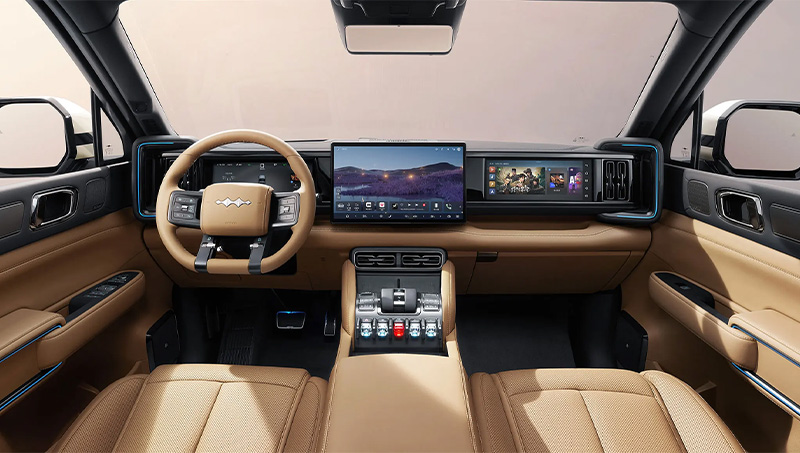
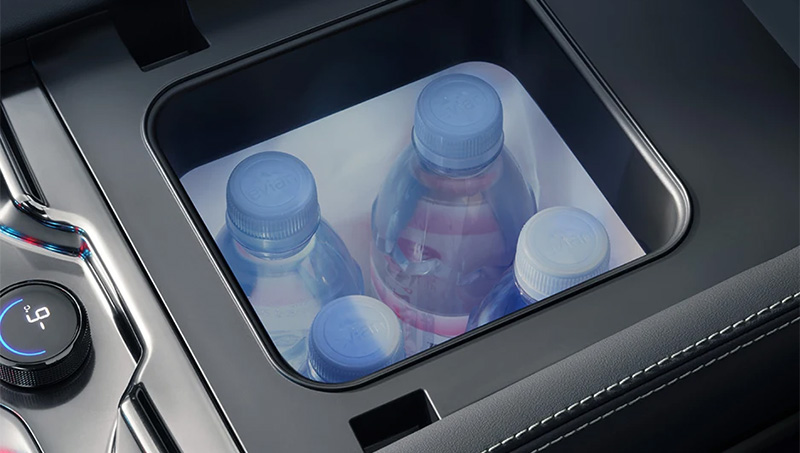
The Yue 7 similarly aims for a luxurious ambience: a 15.6‑inch central display, a full‑digital instrument cluster, a Qualcomm Snapdragon 8295 chip, and a roof‑mounted LiDAR unit, suggesting an advanced driver‑assistance system with significant potential. “Inside the Formula Leopard 5, you experience a fusion of rugged off‑road character and tech‑laden luxury; the Yue 7, on the other hand, tries to conceal more city‑SUV comfort and intelligence beneath its boxy exterior,” commented the chief editor of Driving Control Magazine.
The Formula Leopard 5 measures 4,890 mm in length, 1,970 mm in width, and 1,920 mm in height, with a wheelbase of 2,800 mm. Its five‑seat layout, generous width, and long wheelbase translate into spacious accommodation. A 182‑cm tester enjoyed two fists of headroom in the front and two fists in the rear, with two fists and three fingers of legroom. The rear cargo area, accessed via a side‑hinged tailgate, is neatly shaped and can easily accommodate three suitcases (28‑inch, 24‑inch and 20‑inch). It is worth noting that ladder‑frame construction and complex suspension inevitably intrude on passenger and cargo space, so expectations should be calibrated accordingly compared with unibody crossovers.
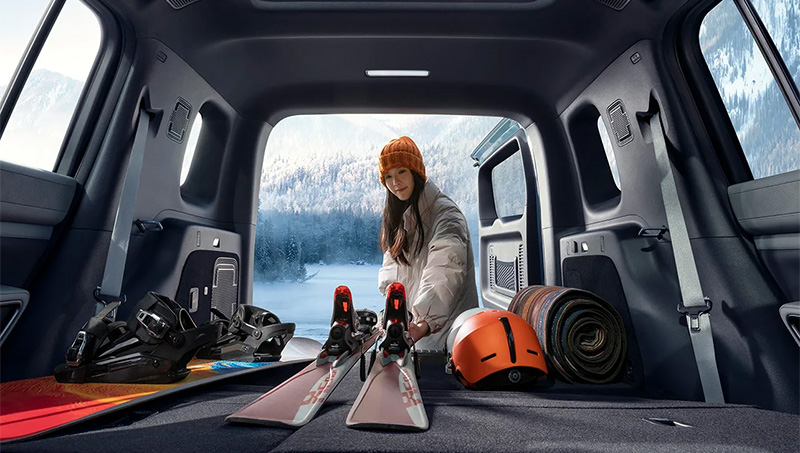
The Yue 7, with dimensions of 4,999×2,004×1,933 mm and a wheelbase of 2,900 mm, out‑sizes the Formula Leopard 5 in both length and wheelbase – already surpassing the Tank 300 and approaching the Tank 500 in overall footprint. Its five‑seat cabin feels airy and uncramped, and the boot offers generous capacity, with rear seats that fold to expand load‑carrying versatility.
1. What kind of vehicle is the Formula Leopard 5?
The Formula Leopard 5 is the inaugural model from BYD’s Formula Leopard sub‑brand, a mid‑sized plug‑in hybrid off‑road SUV built on the DMO super‑hybrid platform. Its core selling points include a body‑on‑frame construction, three differential locks, a 4.8‑second 0‑100 km/h time, and the optional Yunian‑P intelligent hydraulic body‑control system, targeting users in the 250,000–300,000 RMB bracket who prioritise serious off‑road capability.
2. What are the Formula Leopard 5’s key competitive advantages?
Its strengths lie in a combination of authentic off‑road DNA, ferocious performance, and affordable electric drive. The body‑on‑frame chassis, double‑wishbone suspension, and three locking differentials provide fully‑fledged hardware for extreme terrain. The powertrain delivers 505 kW and 760 N·m, enabling a 4.8‑second sprint that outperforms most rivals in its class.
The 31.8‑kWh battery offers a 125‑km pure‑electric range and a combined range of 1,200 km, allowing low‑cost daily commuting without sacrificing off‑road readiness. The high‑spec Yunian‑P system further bridges the gap between trail capability and on‑road comfort. Moreover, the vehicle runs on 92‑RON petrol, helping to keep running costs in check.
3. What are the main differences between the Formula Leopard 5 and the Trumpchi Yue 7, and how should one choose?
The fundamental distinction lies in chassis architecture: the Formula Leopard 5 uses a traditional body‑on‑frame construction, giving it a purer off‑road character, whereas the Yue 7 adopts an embedded‑frame design that aims to balance off‑road rigidity with better on‑road refinement. In terms of performance, the Formula Leopard 5’s 505‑kW system and 4.8‑second acceleration are more potent than the Yue 7’s 400‑kW, 4‑second‑class output. When it comes to pure‑electric range, the Yue 7’s larger battery option (188 km) surpasses the Formula Leopard 5’s 125 km.
Dimensionally, the Yue 7 is larger in every measure – with a wheelbase 100 mm longer and overall length approaching 5 metres – offering more interior space and cargo volume. Braking performance, while not officially disclosed for the Yue 7, is expected to exceed 40 metres from 100‑0 km/h, comparable to the Formula Leopard 5’s measured 41.72 metres. The choice ultimately depends on priorities: opt for the Formula Leopard 5 if extreme off‑road capability, a ladder‑frame chassis, and explosive acceleration are paramount; choose the Trumpchi Yue 7 if you value greater cabin space, longer electric‑only range, and a more balanced compromise between urban comfort and occasional off‑road excursions.
User Comments
Ne: “This configuration works well for family use – plenty of space, and the whole family can travel comfortably.”
Si: “Three differential locks sound seriously tough – gives you peace of mind when tackling rough roads. That’s a real safety boost.”
Advanced Search
Recommended Models
Leapmotor-Leapmotor A10
Updated: Jul,07,2026
ChangAn-CS55 PLUS 2026
Updated: Jul,07,2026
Geely-Galaxy-Geely Galaxy M7
Updated: May,28,2026
Related News
A pioneering creation in the new energ...
Nov,05,2025
Geely Galaxy M9: Reshaping the Large S...
Nov,06,2025
All trims of the Tang L DM are equippe...
Nov,05,2025
What are your thoughts on this car?
* Required Fields