

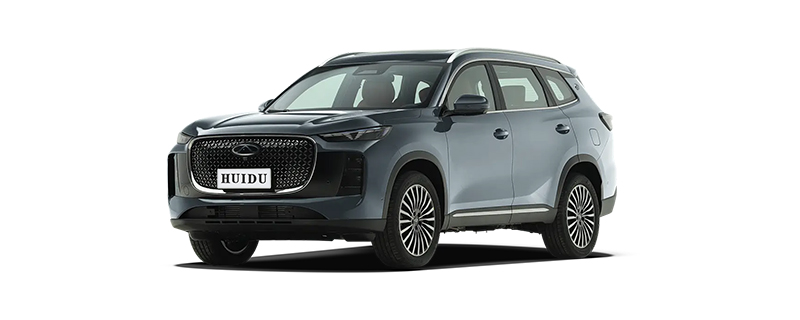
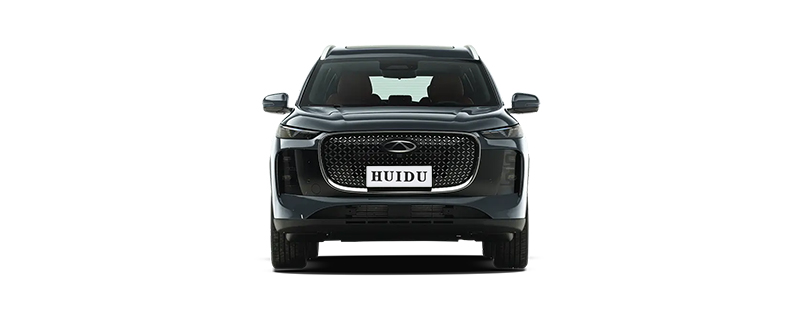
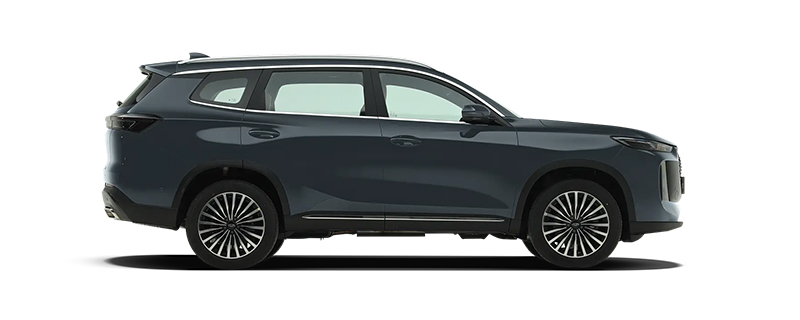
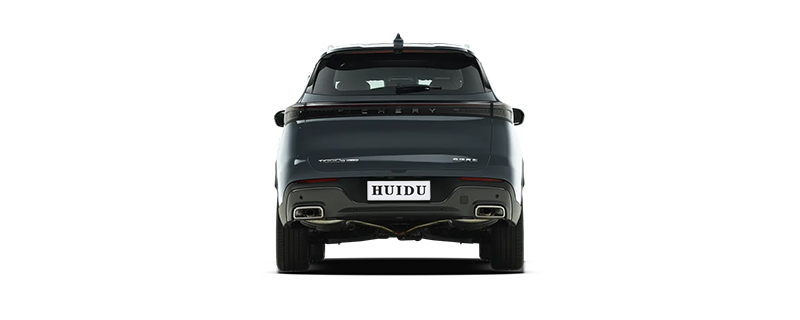
In the current mid-size SUV market priced between RMB 100,000 and 140,000, compact models like the Haval H6 and Changan CS75 PLUS have long exerted downward competitive pressure through their “class-above” value propositions. Against this backdrop, the Chery Tiggo 8 PLUS adopts a pragmatic, no‑nonsense approach. With a starting price of just RMB 109,900 for the 2025 model year, the Chery Tiggo 8 PLUS aims to redefine the value benchmark in the entry‑level mid‑size SUV segment – offering a rare 5+2 flexible seating layout, the potent Kunpeng powertrain, and a well‑sorted chassis, all at an accessible price point.
Behind the wheel, the 2025 Chery Tiggo 8 PLUS PLUS (petrol version) is available with two Kunpeng powerplants: a 1.6‑litre turbocharged unit (1,598 cc) producing 145 kW (197 PS) and 290 N·m of peak torque, mated to a 7‑speed wet dual‑clutch transmission; and a 2.0‑litre turbocharged engine (1,998 cc) developing 187 kW (254 PS) and 390 N·m, paired with either the same 7‑speed DCT or a newly developed 8‑speed automatic transmission. Taking the 1.6T variant as an example, the powertrain calibration prioritises smoothness – throttle response is brisk without being abrupt, making city driving effortless. When the accelerator is pressed deeper, a noticeable shove of torque arrives, with power delivery remaining linear and lag‑free. The 0‑100 km/h sprint takes just 8.9 seconds, providing ample confidence for highway overtaking.


By comparison, the Changan UNI‑K is powered exclusively by the new‑generation Blue Whale 2.0T turbocharged engine (1,998 cc), rated at 171 kW (233 PS) and 390 N·m, coupled with an Aisin 8‑speed automatic transmission. There is a clear gap in peak output: the Chery Tiggo 8 PLUS’s 2.0T version delivers 16 kW more (254 PS vs. 233 PS), yet the Changan UNI‑K’s Aisin 8AT enjoys a stronger reputation for shift smoothness and long‑term reliability. Their respective powertrain philosophies also diverge: the Chery Tiggo 8 PLUS PLUS pursues a “just‑enough” strategy, channelling cost savings into cabin space and seating flexibility; the Changan UNI‑K, in contrast, aims for “abundant power and avant‑garde design” – a more technologically ambitious, upward‑market approach.
In terms of fuel economy, the 1.6T Chery Tiggo 8 PLUS records a WLTC combined figure as low as 7.1 L/100 km, while the 2.0T version returns approximately 7.0 L/100 km. The Changan UNI‑K 2.0T, meanwhile, consumes around 8.5‑9.5 L/100 km in urban driving and can drop to 7.5‑8.0 L/100 km on motorways. Both models run on regular 92‑RON petrol, giving the Tiggo 8 PLUS a slight edge in everyday running costs.
“By entering the RMB 100,000‑grade market as a bona fide mid‑size SUV, the Chery Tiggo 8 PLUS leverages its 5+2 seating and Kunpeng powertrain to outmanoeuvre compact rivals. It shuns gimmicks in favour of flexible space, ample performance, and reasonable fuel consumption – a solid, dependable, and fuss‑free package that resonates with what ordinary families truly expect from a daily driver.”
Settling into the driver’s seat, the Chery Tiggo 8 PLUS offers a commanding view, thanks to its 4,715‑mm length and 2,710‑mm wheelbase. The steering wheel feels substantial yet the helm is light, making urban manoeuvring effortless. The chassis employs a MacPherson strut front suspension and a multi‑link rear setup. The tuning is on the softer side, absorbing surface imperfections with composure; speed bumps are dispatched with minimal disturbance. At 120 km/h on the motorway, the car remains planted and composed, with a reassuring sense of structural integrity. The initial throttle response is slightly sensitive, lending a peppy feel off the line, while mid‑range and top‑end acceleration are smooth and linear – even with a full load, overtaking is executed with confidence.
The Changan UNI‑K also adopts a front MacPherson/rear multi‑link layout, but its tuning is more sophisticated. Its longer 2,890‑mm wheelbase and wider 1,948‑mm track give it added stability at high cruising speeds. The Changan UNI‑K’s initial throttle reaction is somewhat languid, yet its mid‑to‑high‑speed performance is commendable; the Aisin 8AT shifts with clear logic and delivers power effortlessly. The key distinction lies in their respective chassis philosophies: the Chery Tiggo 8 PLUS prioritises comfort and everyday usability, while the Changan UNI‑K strives for a more premium, steady‑riding character.

The Chery Tiggo 8 PLUS is equipped with ventilated front disc brakes and solid rear discs. Higher‑spec variants feature a new Integrated Electronic Brake System (IEBS), which offers faster pressure build‑up and more precise force distribution. In testing, the 100‑0 km/h braking distance was recorded at 34.51 metres – a remarkable figure for this class. Another independent test yielded 38.82 metres, and after ten consecutive stops, no significant fade was observed, with the longest distance still only 40.42 metres – a consistently dependable performance.
The Changan UNI‑K rides on 265/45 R21 Continental MC6 tyres, and its best 100‑0 km/h braking distance measured 39.13 metres – a respectable but not outstanding result. Notably, during emergency braking tests the Changan UNI‑K exhibited a rear‑wheel‑lifting phenomenon, a rare occurrence that hints at insufficient rear suspension travel, potentially compromising stability under hard braking. In this regard, the Chery Tiggo 8 PLUS demonstrates more consistent and reliable braking behaviour.
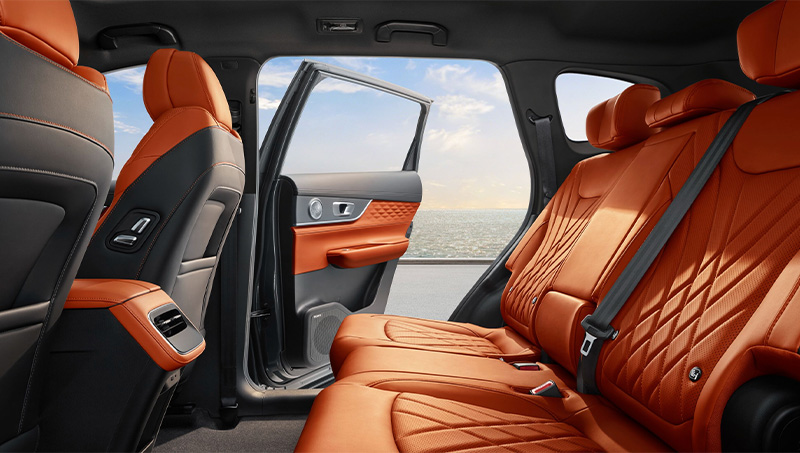
Inside, the Chery Tiggo 8 PLUS centres around a 12.3‑inch dual‑screen display, powered by a Qualcomm Snapdragon 8155 chip that ensures rapid infotainment responses. The cabin features extensive soft‑touch surfacing, accounting for 78.9% of the interior covering. Standard and available equipment include a panoramic sunroof, heated and ventilated front seats, wireless charging, a power tailgate, and a 540‑degree surround‑view camera system (with transparent under‑body view). The 5‑ and 7‑seat configurations offer second‑row seats that slide fore‑aft and have adjustable backrest angles; the third row folds completely flat when not needed.
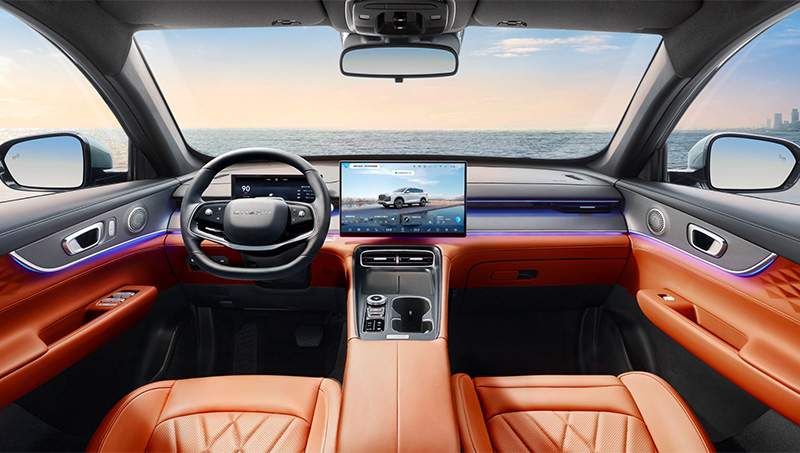
The Changan UNI‑K’s interior leans more heavily into futuristic aesthetics – a 3+1 quad‑screen layout, paired with a more advanced chipset and voice‑recognition system. Zero‑gravity seats, heating and ventilation features further enhance its tech‑forward cabin. However, the Changan UNI‑K’s infotainment has been a frequent source of customer complaints – outdated navigation maps and delayed OTA updates, among other issues.
On the driver‑assistance front, the Chery Tiggo 8 PLUS comes standard with Level‑2 autonomous driving capabilities, including full‑speed adaptive cruise control, lane‑keeping assistance, and autonomous emergency braking. The Changan UNI‑K also offers a full Level‑2 system as standard, with an even broader range of features.
“Step into the Chery Tiggo 8 PLUS and you are met with practicality and purpose – every function serves the family journey. Step into the Changan UNI‑K, and you experience a leap in technology and design.” – Editor‑in‑Chief, Driving Control
Space is the Chery Tiggo 8 PLUS’s strongest suit. Despite its 2,710‑mm wheelbase not being exceptional among mid‑size SUVs, the clever 5+2 layout and high space utilisation deliver genuine seven‑seat capability rarely seen at the RMB 120,000 price point. With the second‑row seats pushed fully rearward, a 175‑cm passenger enjoys over two fists of knee room; the third row is suitable for children or short‑distance trips. When both rear rows are folded flat, the boot capacity expands to over 1,930 litres – easily accommodating family outings or bulky cargo. In five‑seat mode, the luggage volume stands at 889 litres.
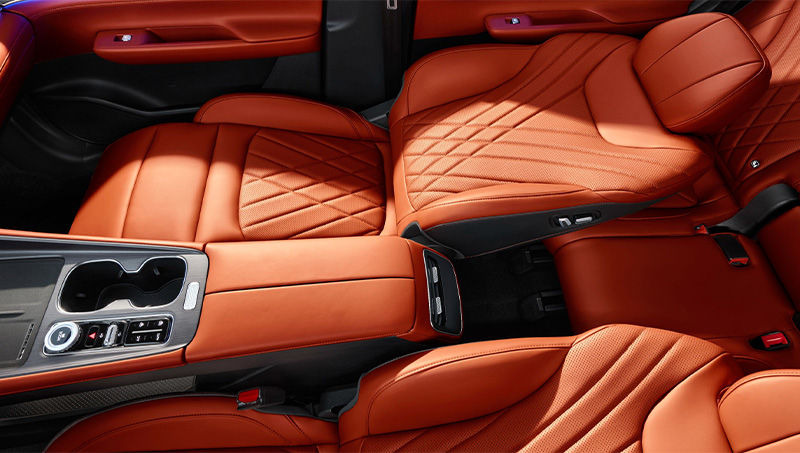
The Changan UNI‑K, measuring 4,865×1,948×1,700 mm with a 2,890‑mm wheelbase, holds advantages of 180 mm in wheelbase and 88 mm in width over the Chery Tiggo 8 PLUS. It adopts a five‑seat layout, and rear legroom is generous – over two fists of space. However, while the Changan UNI‑K wins on absolute dimensions, the Chery Tiggo 8 PLUS dominates in flexibility – sliding second row, fold‑flat third row that creates a flat sleeping area, and multi‑purpose cargo configurations that the Changan UNI‑K simply cannot match.
The contest between these two vehicles is a direct conversation between “practical large space + 5+2 versatility” and “premium tech + spacious five‑seater”. Opting for the Chery Tiggo 8 PLUS means securing a flexible 5+2 layout, a 1,930‑litre extended boot, and Kunpeng power for a class‑leading space experience within a RMB 100,000 budget. Choosing the Changan UNI‑K, on the other hand, signals a willingness to pay a premium for larger exterior dimensions, more daring design, and the silky‑smooth Aisin 8‑speed gearbox.
1. What exactly is the Chery Tiggo 8 PLUS?
The Chery Tiggo 8 PLUS is a mid‑size SUV under the Chery brand, positioned in the RMB 100,000‑140,000 family‑oriented segment. Its core selling points include a 5+2 flexible seating arrangement, 1.6T/2.0T Kunpeng powertrains, and standard Level‑2 driving assistance, targeting budget‑conscious families seeking ample space and high value‑for‑money.
2. What are the Chery Tiggo 8 PLUS’s main competitive advantages?
Its strengths lie in the combination of 5+2 seating, Kunpeng power, and class‑leading space utilisation:
2,710‑mm wheelbase + 5+2 seats, with sliding second row and fully fold‑flat third row, yielding up to 1,930 litres of cargo volume;1.6T/2.0T Kunpeng engines – the 1.6T achieves WLTC fuel consumption of just 7.1 L/100 km, while the 2.0T can sprint from 0‑100 km/h in the 7‑second bracket;Impressive 100‑0 km/h braking performance (34.51‑38.82 metres) – a standout in its class;Qualcomm 8155 chip, Level‑2 ADAS, and 78.9% soft‑touch interior coverage;Competitive starting price of RMB 109,900, offering exceptional value.
3. What are the main differences between the Chery Tiggo 8 PLUS and the Changan UNI‑K, and which one should I choose?
Seating and space: Chery Tiggo 8 PLUS offers 5+2 seating with sliding second row and fold‑flat third row – flexibility wins; Changan UNI‑K is a spacious five‑seater with no seven‑seat option.
Powertrain: Chery Tiggo 8 PLUS 2.0T delivers higher output (187 kW vs. 171 kW); Changan UNI‑K’s Aisin 8AT is renowned for smoother shifts and reliability.
Braking: Chery Tiggo 8 PLUS stops from 100‑0 km/h in 34.51‑38.82 metres, outperforming the Changan UNI‑K’s 39.13 metres.
Interior tech: Changan UNI‑K’s quad‑screen layout and zero‑gravity seats create a more futuristic ambience; Chery Tiggo 8 PLUS’s dual‑screen + 8155 chip is practical and responsive.
Price: Chery Tiggo 8 PLUS has a lower entry point (RMB 109,900 vs. RMB 154,900), giving it a clear cost advantage.
Recommendation: Choose the Chery Tiggo 8 PLUS if you prioritise flexible 5+2 seating, expanded cargo capacity (up to 1,930 litres), and the best value for your budget. Choose the Changan UNI‑K if you are drawn to a larger exterior, more avant‑gardist styling, and the refined shift quality of the Aisin 8‑speed automatic.
User Comments
G: Chery has shown genuine commitment to consumers through its actions.
Zhi: The upgraded Chery Tiggo 8 PLUS is now an even more compelling buy.
Advanced Search
Recommended Models
Leapmotor-Leapmotor A10
Updated: Jul,07,2026
ChangAn-CS55 PLUS 2026
Updated: Jul,07,2026
Geely-Galaxy-Geely Galaxy M7
Updated: May,28,2026
Related News
A pioneering creation in the new energ...
Nov,05,2025
Geely Galaxy M9: Reshaping the Large S...
Nov,06,2025
All trims of the Tang L DM are equippe...
Nov,05,2025
What are your thoughts on this car?
* Required Fields