

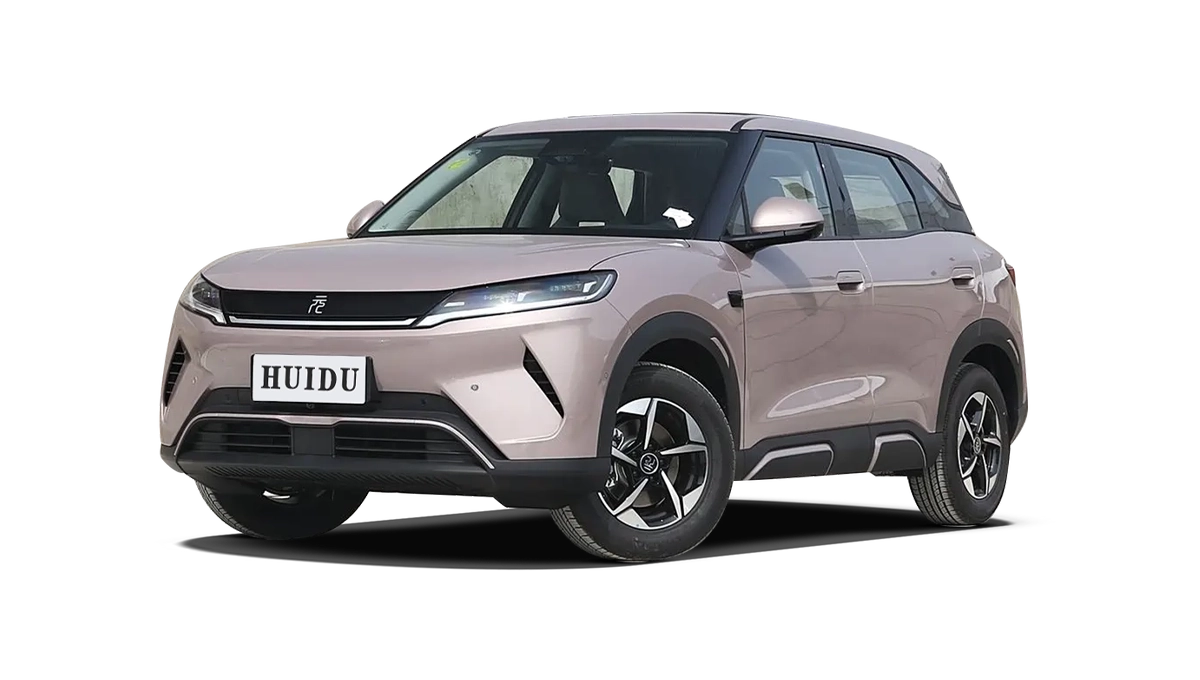
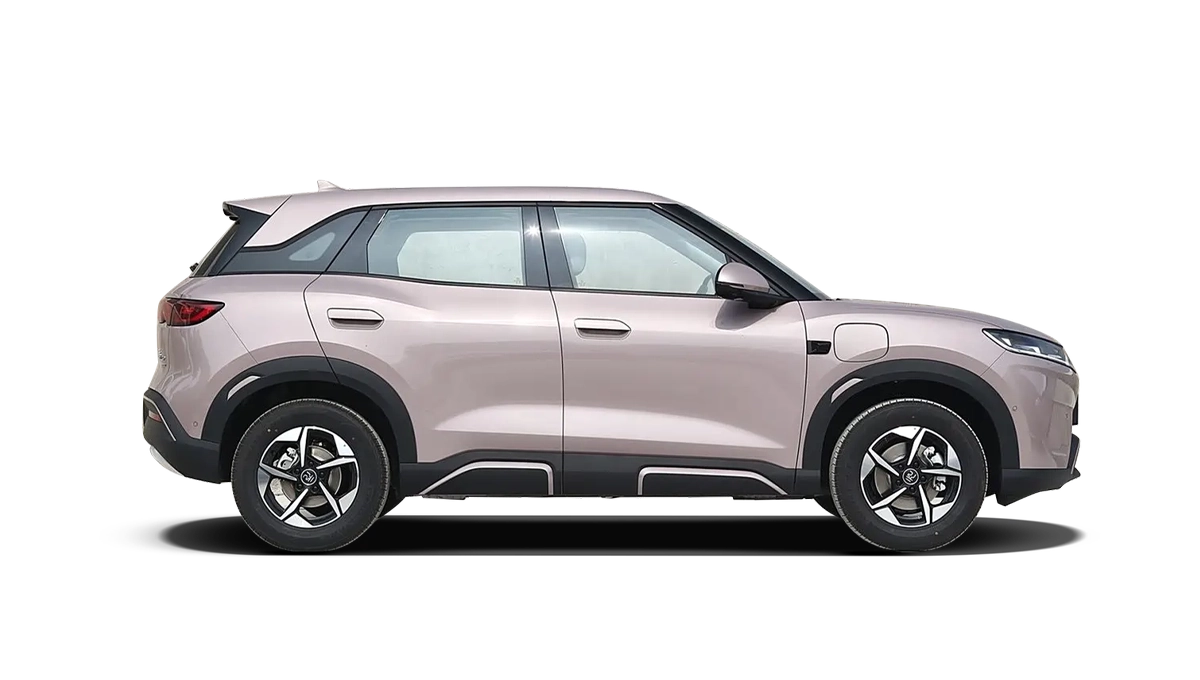
Work-from-Home, Suburban Living, and Coastal Escapes—these multifaceted lifestyle trends are gaining momentum. Similarly, for buyers seeking a compact SUV, the BYD Yuan UP DM-i aims to embody a “best-of-both-worlds” philosophy in its vehicle positioning.
Unlike conventional plug-in hybrid electric vehicles (PHEVs), the BYD Yuan UP DM-i is developed on BYD’s Yuan UP all-electric platform. As such, its driving dynamics closely resemble those of a pure electric vehicle, primarily powered by a battery pack and dual electric motors—one at the front and one at the rear. When battery levels run low, a compact 1.5-liter gasoline engine acts as a generator to replenish the battery and extend the vehicle’s total range, effectively functioning as a series-type extended-range electric vehicle (EREV) that supports external charging.
The BYD Yuan UP DM-i is offered in two trim levels: Active and Boost. Both variants feature the same powertrain architecture—a front-mounted dual-motor setup, a traction battery, and the aforementioned 1.5L gasoline range extender. The Active model delivers a combined system output of 164 horsepower, achieving a 0–100 km/h acceleration time of 9.1 seconds according to official figures. The Boost variant, true to its name, offers enhanced performance with a peak output of 209 horsepower and a 0–100 km/h sprint time of just 7.5 seconds—an impressive figure within the compact SUV segment, outperforming many rivals.
On the road, the Boost version proves satisfying in real-world driving. In urban environments, the instant torque from the electric motors ensures brisk take-offs and responsive overtaking. Even at highway speeds, the electric drivetrain maintains ample power reserves, delivering consistent and confident acceleration throughout the journey.
The suspension tuning leans toward comfort, allowing the vehicle to absorb typical city-road imperfections with composure. Our test vehicle—the Boost trim—was equipped with 17-inch wheels, which further enhanced ride quality. However, on rural roads or uneven surfaces at higher speeds, the suspension transmits more road harshness than expected, revealing limitations in its damping refinement. During cornering, the relatively soft suspension setup results in noticeable body roll, compounded by modest tire grip, which somewhat undermines driver confidence. The steering calibration fails to compensate for these shortcomings: while light in effort, it lacks natural feedback, requiring frequent minor corrections to accurately sense front-wheel behavior and diminishing overall handling precision.
In terms of cabin quietness, the BYD Yuan UP DM-i performs admirably overall. Tire noise remains well-controlled at high speeds, though wind noise around the side mirrors and A-pillars becomes perceptible. The hybrid system’s operational smoothness varies by condition. Under normal driving, the engine engages subtly and transitions seamlessly—often imperceptibly. Yet under high-load scenarios, such as aggressive acceleration or rapid lane changes, the engine’s audible presence becomes notably pronounced.
Overall, the BYD Yuan UP DM-i is an easy-to-drive vehicle. The electric motors paired with a single-speed transmission deliver linear power delivery, while the brake pedal offers progressive and predictable feel, facilitating smooth deceleration. Regarding all-electric range, the Active variant features a usable battery capacity of 7.8 kWh, yielding an official EPA-rated electric-only range of 25 miles—competitive against some rivals but modest by current PHEV standards. The Boost model, equipped with a larger 18 kWh battery, extends this to 56 miles, a figure that surpasses many larger plug-in hybrid SUVs on the market.
Although official combined fuel economy data for the Active trim has not yet been released, the Boost variant is rated at 55.4 miles per gallon (approximately 4.3 L/100 km) in combined driving. As with all plug-in hybrids, achieving optimal efficiency requires regular battery charging. In terms of charging capability, the Active model supports AC charging up to 3.3 kW, enabling a full charge via a standard home charger in approximately 2 hours and 40 minutes. The Boost variant supports faster 6.6 kW AC charging; despite its larger battery, it reaches full charge in about 3 hours.
Additionally, the Boost trim includes Vehicle-to-Load (V2L) functionality, allowing users to power external devices directly from the vehicle’s battery—ideal for outdoor activities such as boiling water or inflating an e-bike tire—thereby expanding the car’s utility beyond conventional transportation.The interior of the BYD Yuan UP adopts a clean and orderly design language, setting it distinctly apart from its larger sibling, the BYD Atto 3, which features trendier elements such as flush door handles and a kettlebell-inspired gear selector.
“I like how easy it is to select the hybrid and electric driving modes in the Atto 2 DM-i. You simply push a button on the centre console to switch between the two.” – George Hill, Used Cars Writer
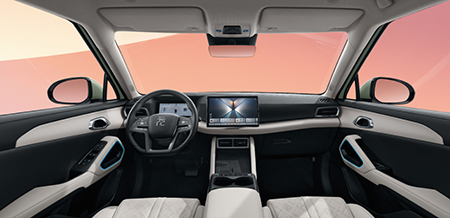
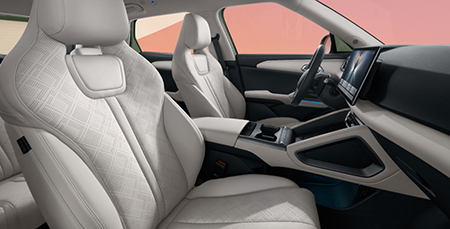
Nevertheless, staying true to the brand’s broader design ethos, the BYD Yuan UP DM-i delivers commendable interior quality. Physical buttons are kept to a minimum, yet each offers a satisfyingly solid tactile response. Most of the dashboard is wrapped in soft-touch materials, while metallic-finish door handles add a refined touch to the cabin’s detailing.
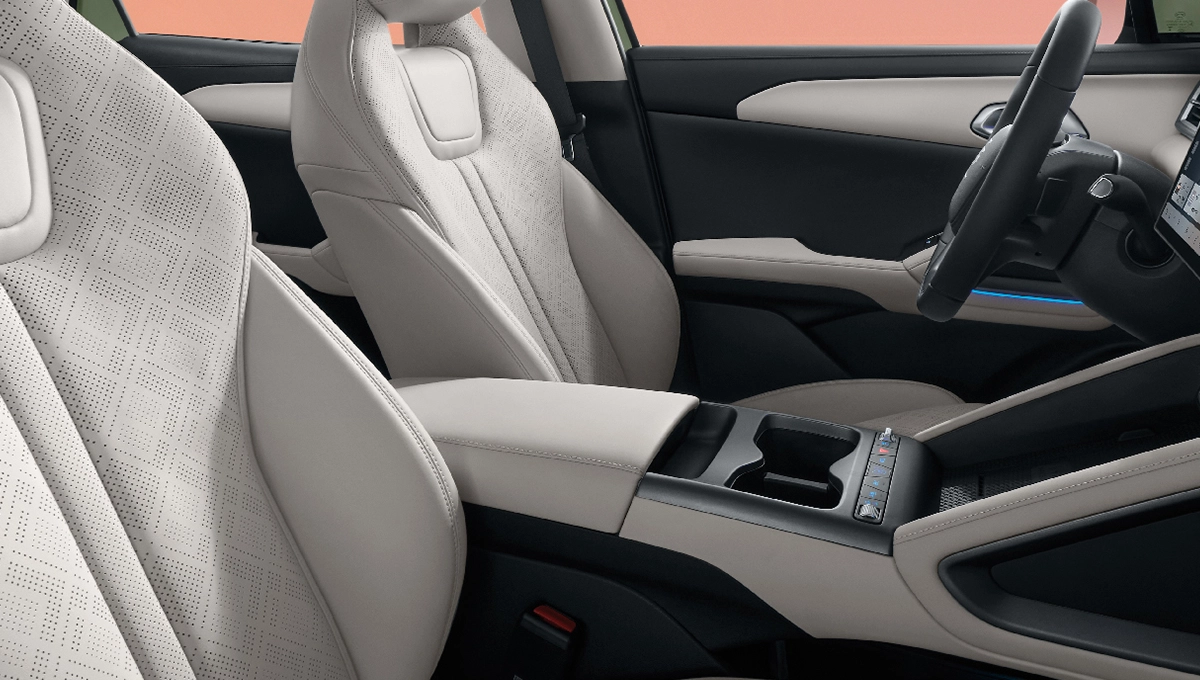
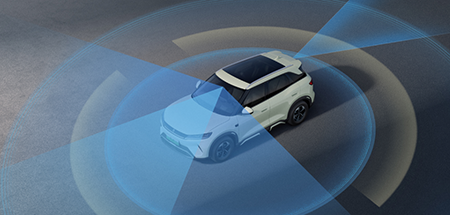
The driving position is comfortable and well-considered. The seats are generously padded and offer good support, and all variants come standard with a six-way power-adjustable driver’s seat. The steering column provides ample range for both reach and height adjustment, accommodating a wide variety of driver statures. For those who favor an open, airy view of the road, the BYD Yuan UP DM-i proves an appealing choice: slim A-pillars, expansive side windows, and a generously sized rear windshield collectively ensure excellent all-around visibility. Front and rear parking sensors and blind-spot monitoring are standard across the lineup, while the Boost trim adds a 360-degree surround-view camera system for enhanced maneuverability.
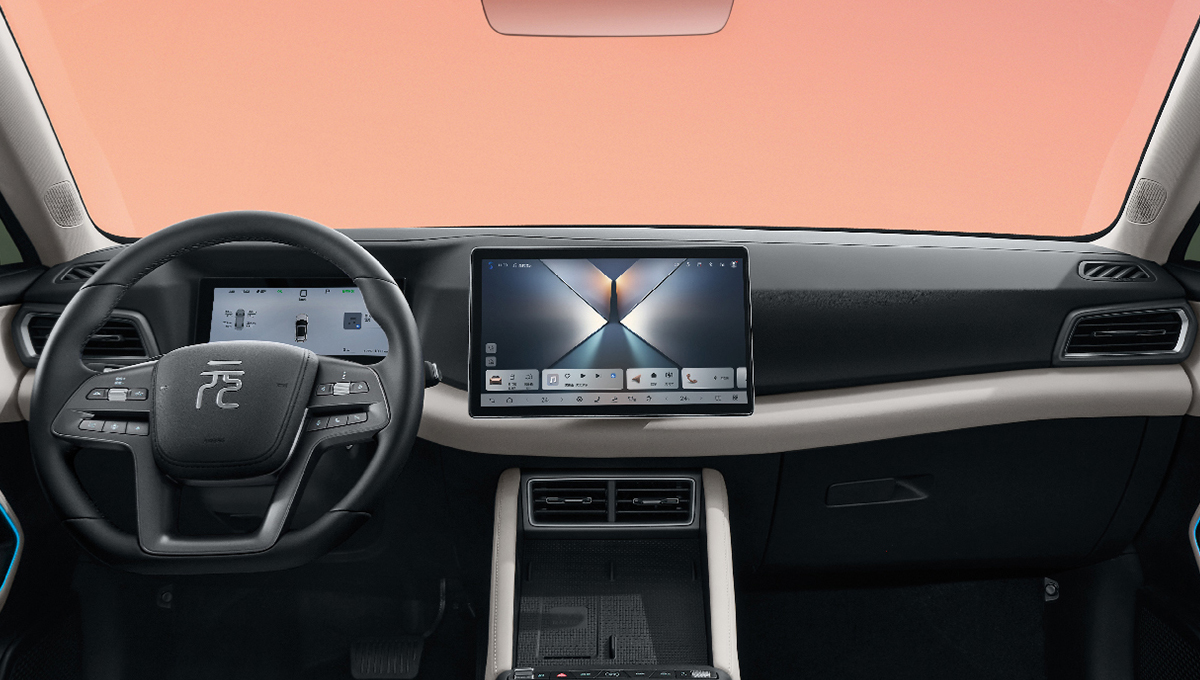
Most vehicle functions are managed through a centrally mounted 12.8-inch touchscreen. Notably, unlike the pure-electric BYD Yuan UP—whose display can rotate between portrait and landscape orientations—the DM-i variant’s screen is fixed in a horizontal layout. The infotainment system runs smoothly, powered by BYD’s latest software iteration, which delivers quick responses and a crisp, legible interface. The menu structure is relatively intuitive, with primary controls and virtual climate buttons permanently anchored along the bottom of the screen. That said, these on-screen icons are somewhat small, making them slightly awkward to operate while driving.
Driving and trip-related information is presented on an 8.8-inch digital instrument cluster. Although the steering wheel includes physical shortcut buttons that allow easy menu navigation—a practical and user-friendly feature—the display itself presents information in a fairly dense layout, with text rendered in a relatively small font size, which may challenge readability for some drivers.
As a compact SUV, the BYD Yuan UP DM-i offers remarkably generous interior space. In the front row, even two occupants standing approximately 1.83 meters (6 feet) tall enjoy ample legroom. The elevated roofline provides a sense of openness overhead, and the standard panoramic sunroof further enhances the cabin’s airy, light-filled ambiance.
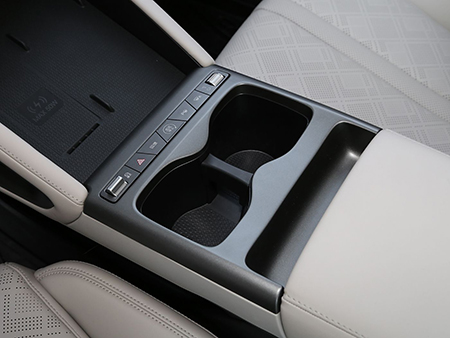
Storage solutions throughout the cabin are both plentiful and practical. The center console features two cupholders, a wireless charging pad, and a large, padded under-arm storage compartment. The glovebox also offers respectable volume for everyday essentials.
The rear seat matches the front in terms of comfort and spaciousness. Two adults of 1.83 meters can sit comfortably side by side, with generous clearance for both legs and heads. A flat floor tunnel adds to the convenience, allowing greater freedom of movement for passengers’ feet.
All variants offer a boot capacity of 425 liters, with a well-shaped, regular interior that maximizes usable space. However, the load floor is fixed at a relatively high level, requiring users to lift luggage over a somewhat tall sill—an aspect that may prove slightly inconvenient during loading. The rear seats fold in a 60/40 split configuration, a feature that aligns with segment norms and enhances cargo flexibility when needed.
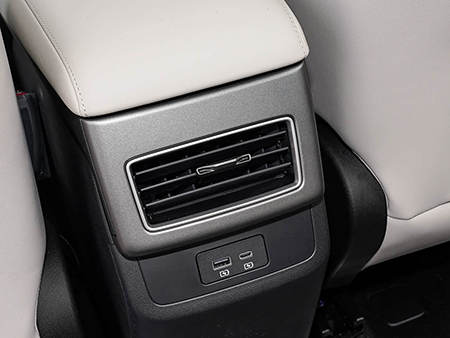
“I’m 6ft2in and had plenty of space when sitting behind my driving position, with my knees only just brushing up against the front seat. For a small SUV, that’s pretty good.” – George Hill, Used Cars Writer
The BYD Yuan UP DM-i comes well-equipped across all trims, with a generous suite of standard features. Even the entry-level Active variant includes 16-inch alloy wheels, LED headlights, a panoramic sunroof, adaptive cruise control, automatic headlights and rain-sensing wipers, front and rear parking sensors, and a rearview camera. It also features a 12.3-inch infotainment display with seamless smartphone integration via both Android Auto and Apple CarPlay.
The Boost trim builds significantly on this foundation, adding 17-inch alloy wheels, synthetic leather upholstery, heated front seats, power-adjustable driver’s seat, heated steering wheel, and a wireless smartphone charging pad.In terms of safety technology, the BYD Yuan UP DM-i stands out for its comprehensive offering. Standard across the range are automatic emergency braking (AEB), blind-spot monitoring, traffic sign recognition, lane-keeping assist, and rear cross-traffic alert—delivering a robust suite of active safety systems even at the base level.
1. What is the relationship between Denza and BYD?
Denza is a premium new energy vehicle (NEV) brand. It was originally established as a 50/50 joint venture between BYD and Mercedes-Benz. Currently, Denza is fully owned and controlled by BYD, operating as its luxury subsidiary.
2. Where are BYD products made?
BYD products are primarily made in China, with major production bases in cities like Xi'an, Shenzhen, Changsha, and Hefei. The company is also expanding its global manufacturing footprint, with factories operating or under construction in countries including Thailand, Hungary, and Brazil.
3. Who is behind BYD?
The key figure behind BYD is its founder, Wang Chuanfu. He is an engineer, serves as the Chairman and President of the company, and is known for his deep focus on technology and innovation.
4. Which is BYD's most expensive car?
Currently, BYD's most expensive car is the Yangwang U8, specifically the high-end "Dingshi Edition" of this model. It is a full-size luxury SUV from BYD's ultra-premium brand "Yangwang" .
For copyright-related inquiries, please contact us.Partial content is sourced from What Car?.
Advanced Search
Recommended Models
Geely-Galaxy-Geely Galaxy M7
Updated: May,28,2026
Mazda-Mazda EZ-60
Updated: Mar,02,2026

GAC Trumpchi-Trumpchi ES9
Updated: Feb,26,2026
Related News
A pioneering creation in the new energ...
Nov,05,2025
Geely Galaxy M9: Reshaping the Large S...
Nov,06,2025
All trims of the Tang L DM are equippe...
Nov,05,2025
What are your thoughts on this car?
* Required Fields