

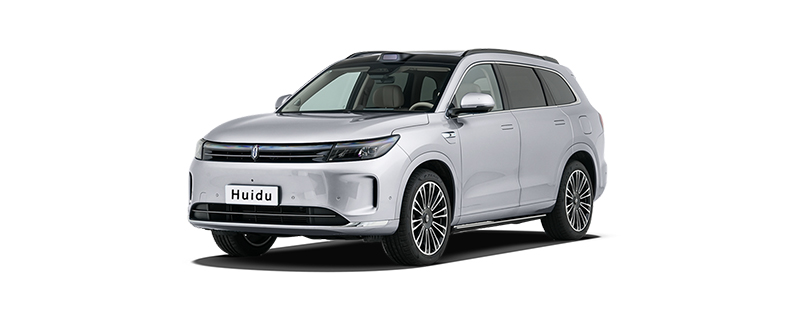
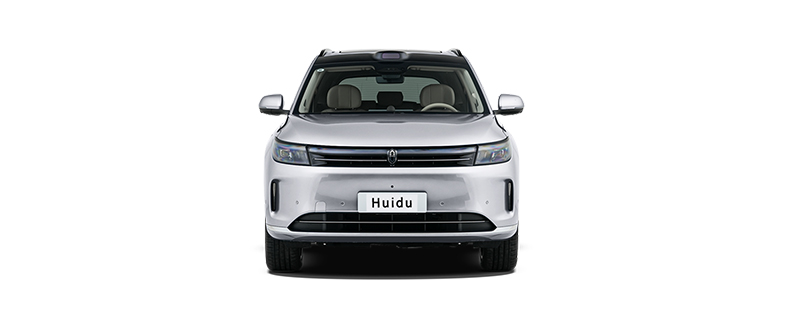
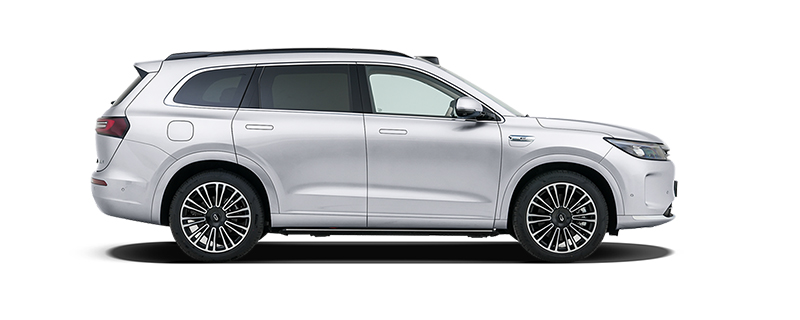
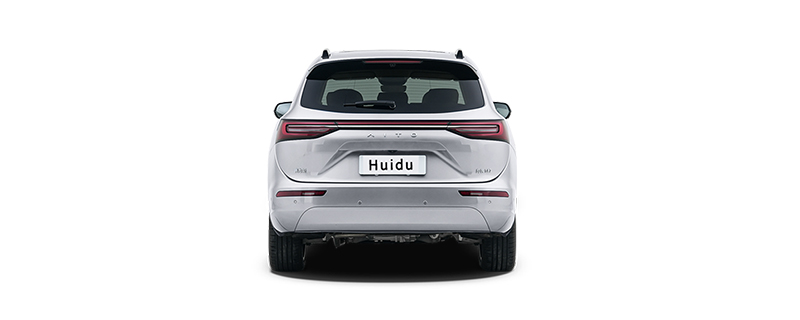
In the 250,000–300,000 RMB family SUV segment, a fierce battle is escalating between “ubiquitous electric-drive technology” and “traditional internal-combustion heritage.” The AITO M7 enters the arena as a “pioneer of intelligent driving,” seeking to redefine the value benchmark of 300,000‑level smart SUVs with its dual powertrain (pure electric / range‑extender), Huawei ADS intelligent driving system, and comprehensively class‑leading cabin features. On the opposite side stands the perennial sales champion and traditional fuel giant – the Chang’an CS75 PLUS – renowned for its solid mechanical foundation and outstanding cost‑effectiveness. Although positioned differently, these two contenders clash directly in the market. Their confrontation is essentially a collision of two distinct powertrain philosophies and product logics.
Behind the wheel, the all‑new 2025 AITO M7 comes standard with the Huawei Whale Battery platform, offering both range‑extender and pure‑electric options, as well as large five‑seat and premium six‑seat layouts. The range‑extender all‑wheel‑drive version we tested delivers approximately 330 kW of power and 660 N·m of peak torque from its electric motors, achieving 0‑100 km/h in just 4.8 seconds. The accelerator tuning is linear and gentle – no abrupt surge at start – with power delivery as smooth and composed as a warm stream. Even when you floor the accelerator, the instantly unleashed torrent of torque propels this 2.5‑ton vehicle effortlessly and without hesitation during high‑speed overtaking, all in near silence. This is the pure composure that electric drive brings.


By contrast, the Chang’an CS75 PLUS 1.5T variant is powered by the Blue Core 1.5T high‑pressure direct‑injection engine, producing 141 kW (192 hp) and 310 N·m of peak torque, paired with an Aisin 8AT transmission. Its power delivery requires waiting for turbo spool‑up and downshifts – though in Sport mode the response is decent, the overall powertrain rhythm exhibits a clear mechanical lag compared to the instant response of the M7’s electric drive. Their powertrain philosophies are distinct: the AITO M7 is an “all‑domain electric cruiser, serene and confident for the future,” while the Chang’an CS75 PLUS is a “mechanically textured, rugged and reliable volume king.”
The AITO M7 range‑extender version is equipped with a 42 kWh or 52 kWh ternary lithium battery, offering a CLTC pure‑electric range of up to 275 km and a combined range exceeding 1,440 km, with DC fast‑charging capability. The Chang’an CS75 PLUS features a generous 60‑litre fuel tank using 92‑RON petrol, with a WLTC combined fuel consumption of approximately 6.89 L/100 km, giving a full‑tank range of nearly 900 km. The AITO M7’s seamless integration of pure‑electric commuting and fuel‑powered long‑distance travel thoroughly eliminates range anxiety, while the convenience and low threshold of filling up the Chang’an CS75 PLUS with 92‑RON petrol remain highly competitive – a quintessential value divergence between traditional and new‑energy vehicles.
“In the large SUV market under 300,000 RMB, the AITO M7, deeply empowered by Huawei, delivers an overwhelming blow in terms of intelligent driving and cabin experience. Meanwhile, the Chang’an CS75 PLUS, with its class‑leading space and the reliability of the Aisin 8AT, firmly anchors the 100,000‑150,000 RMB segment. Though they compete on the same turf, the real divide lies in consumers’ ultimate allegiance to a technology pathway.” – Chen An, SUV Market Analyst
Sliding into the cockpit of the AITO M7, its massive body (5,080×1,999×1,780 mm) and long wheelbase (3,030 mm) give the driver a commanding view. The steering wheel feels substantial, with light and linear effort – extremely easy for low‑speed manoeuvring. On urban roads, the chassis uses a front all‑aluminium double‑wishbone and rear five‑link independent suspension; the high‑spec version further features a dual‑chamber closed‑loop air suspension and continuously variable damping shock absorbers. In daily driving, this million‑class suspension system completely isolates minor road undulations, making the vehicle glide like an icebreaker – stable and solid. Even when the engine starts in low‑battery conditions, cabin noise isolation remains excellent, with NVH levels easily surpassing those of comparable fuel vehicles.
The Chang’an CS75 PLUS’s chassis adopts a front MacPherson and rear multi‑link independent suspension. Tuning reflects Chang’an’s years of expertise: it absorbs minor bumps decently and handles speed bumps crisply. Yet, for all its competence, the vibration and transmission judder inherent to conventional fuel engines cannot be eliminated during idle stops or low‑speed crawling. In ride quality, the M7, aided by electric drive and double‑glazed windows, clearly excels in quietness.

The AITO M7’s steering precision stands out among large SUVs, thanks to its flexible turning radius and the HUAWEI DATS 2.0 intelligent torque control system, which precisely distributes torque to each wheel in real time. The high‑spec closed‑loop dual‑chamber air suspension, with five‑level height adjustment, automatically switches modes based on vehicle speed and road conditions – stable as a rock at high speeds. When cornering briskly, the chassis’s lateral support is surprisingly robust, inspiring great confidence. The Chang’an CS75 PLUS’s steering is light but lacks road feel; its cornering lean control is among the best in its class, yet compared to the AITO M7 with its dual‑chamber air suspension, the suspension response faces hard physical constraints.
In braking, the AITO M7 is equipped with a high‑performance system, achieving a tested 100‑0 km/h braking distance of approximately 38.5 metres. The Chang’an CS75 PLUS, with a tested distance of 36.4 metres, delivers a better braking performance.
The interior of the AITO M7 is the culmination of the HarmonyOS ecosystem. The cabin adopts a profoundly symmetrical design, featuring a new 16.1‑inch 3K floating central display with a bezel width of just 4.8 mm and a 50% improvement in resolution – delivering exquisite, immersive visuals. A new 26‑inch WHUD head‑up display is complemented by a 68‑inch AR‑HUD, which can transform into a private home cinema when parked. A 10.25‑inch passenger display and a 17.3‑inch 3K high‑definition rear entertainment screen fully satisfy family multimedia needs. The Huawei HarmonyOS vehicle system is in a league of its own in terms of ecosystem continuity, voice interaction, and application expandability.
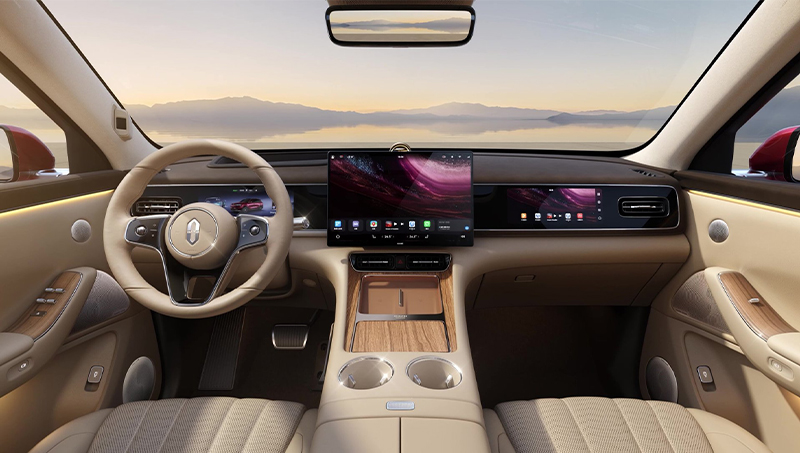
The Chang’an CS75 PLUS’s interior features a 14.6‑inch central screen and a 10.25‑inch full‑LCD instrument cluster, running the Tianshu intelligent OS integrated with the DeepSeek large language model. In terms of screen size, computing power, ecosystem richness, and high‑level intelligent driving features, the Chang’an CS75 PLUS lags significantly behind the HarmonyOS cabin of the AITO M7, representing a generational gap.
Intelligent driving assistance is the most brutal dividing line. The AITO M7 comes standard with the Huawei ADS 3.3 system, equipped with a 192‑line LiDAR and high‑definition cameras, supporting urban NCA map‑free navigation. The Chang’an CS75 PLUS only offers basic Level‑2 driver assistance. The disparity in autonomous driving capability is no longer a matter of feature differences but a technological generation gap.
“In the AITO M7’s cabin, you feel the paradigm‑shifting convenience of the HarmonyOS ecosystem. In the Chang’an CS75 PLUS, you feel the solidity and sincerity forged by years of traditional internal‑combustion engineering.” – Editor‑in‑Chief, Driving Control
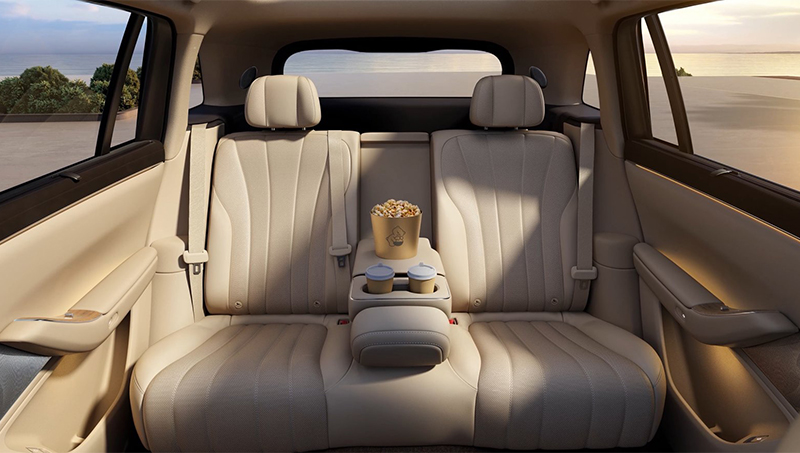
The AITO M7’s space delivers a versatile and all‑round form. The 5,080‑mm length and 3,030‑mm wheelbase ensure an effective cabin space of 3,434 mm. The new model offers large five‑seat and premium six‑seat layouts. The second‑row zero‑gravity seats are a boon for long journeys, and the third row is no longer a token gesture but a genuine seating position. The boot volume is flexible, easily accommodating family travel luggage when the rear seats are folded.

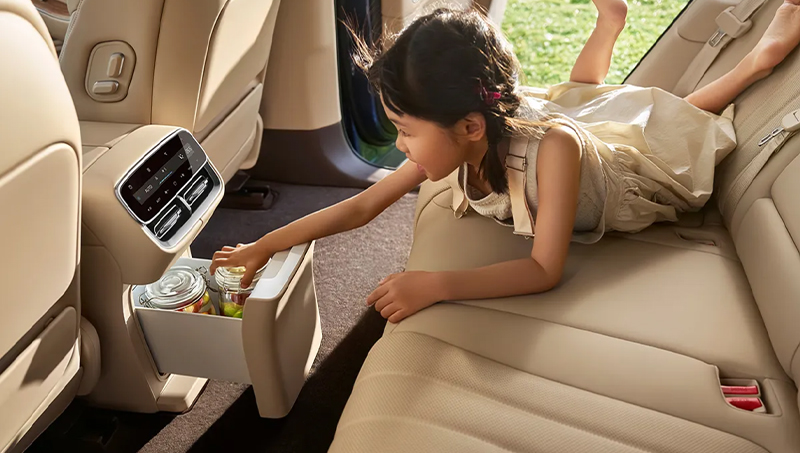
The Chang’an CS75 PLUS measures 4,770 mm in length with a 2,710‑mm wheelbase, focused on a five‑seat layout. Rear legroom is generous in its class, with a standard boot volume of 620 litres, expandable to 1,450 litres with the rear seats folded – more than sufficient for a three‑person family. The Chang’an CS75 PLUS uses highly efficient space design to meet the daily needs of most families. However, for multigenerational or three‑child travel scenarios, the AITO M7’s six‑seat layout undoubtedly offers greater coverage.
1.What kind of vehicle is the AITO M7?
The AITO M7 is a mid‑to‑large‑size range‑extender / pure‑electric smart SUV jointly developed by Seres and Huawei. Its core selling points are the dual‑powertrain layout, Huawei full‑stack intelligent driving solution, HarmonyOS smart cockpit, and six‑seat spacious interior, targeting users in the 280,000‑380,000 RMB range who seek technology and all‑scenario family utility.
2.What is the AITO M7’s core competitiveness?
Its core competitiveness lies in the combination of Huawei’s full‑stack intelligent driving, HarmonyOS cockpit, and optional dual powertrains:
Standard Huawei ADS 3.3 system with LiDAR and urban NCA full‑scenario autonomous driving.
16.1‑inch giant screen + HarmonyOS cockpit + AR‑HUD.
Pure‑electric / range‑extender options with a combined range exceeding 1,440 km.
All‑aluminium double‑wishbone front suspension plus optional dual‑chamber air suspension – a class‑leaping chassis configuration.
Six‑seat layout plus large five‑seat option, with second‑row zero‑gravity seats offering class‑leading comfort.
3.What are the main differences between the AITO M7 and the Chang’an CS75 PLUS, and how should one choose?
Powertrain: AITO M7 – pure‑electric / range‑extender, all‑domain electric drive, smooth and quiet; Chang’an CS75 PLUS – petrol + Aisin 8AT, mechanical feel.
Intelligent driving: AITO M7 – standard Huawei ADS 3.3 with urban NCA map‑free navigation; Chang’an CS75 PLUS – only basic Level‑2.
Chassis configuration: AITO M7 (high‑spec) – dual‑chamber closed‑loop air suspension + CDC; Chang’an CS75 PLUS – no air suspension, conventional mechanical suspension.
Space layout: AITO M7 – six‑seat / large five‑seat, suitable for larger families; Chang’an CS75 PLUS – focused five‑seat layout.
Price range: AITO M7 – 280,000‑380,000 RMB; Chang’an CS75 PLUS – 99,900‑130,000 RMB – a vast entry‑level gap.
Choice advice: Choose the AITO M7 if you prioritise all‑scenario intelligent driving, six‑seat spaciousness, and quiet electric‑drive comfort. Choose the Chang’an CS75 PLUS if you pursue extreme cost‑effectiveness, the proven reliability of the Aisin 8AT, typically travel with fewer than five people, and mostly rely on petrol for daily commuting.
Advanced Search
Recommended Models
Leapmotor-Leapmotor A10
Updated: Jul,07,2026
ChangAn-CS55 PLUS 2026
Updated: Jul,07,2026
Geely-Galaxy-Geely Galaxy M7
Updated: May,28,2026
Related News
A pioneering creation in the new energ...
Nov,05,2025
Geely Galaxy M9: Reshaping the Large S...
Nov,06,2025
All trims of the Tang L DM are equippe...
Nov,05,2025
What are your thoughts on this car?
* Required Fields